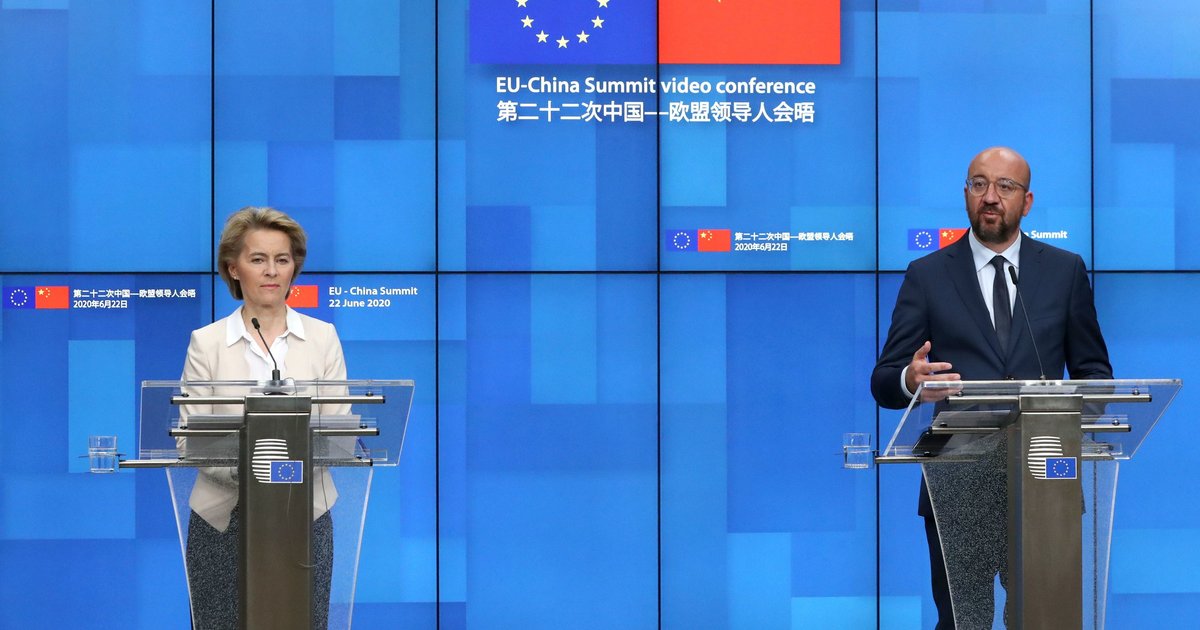
The Chinese Ministry of Commerce stated on Monday that Beijing will take countermeasures if the European Union insists on implementing its new plan known as 'Made in Europe', which aims to enhance European industries in the face of strong competition from China. This plan was revealed last March and requires companies seeking access to public funding in strategic sectors such as automotive, green technology, and steel to adhere to specific standards related to products manufactured in Europe.
This move is part of the EU's efforts to regain its competitive edge and reduce the decline of its industries amid the economic challenges facing the continent. The Chinese Ministry of Commerce expressed concern over these measures, indicating that they represent systematic discrimination against Chinese companies.
Details of the Initiative
The 'Made in Europe' plan, officially known as the 'Industrial Acceleration Law', imposes requirements on foreign companies to collaborate with European firms and transfer technological knowledge when entering the European market. The Chinese Chamber of Commerce in the EU has deemed this plan a shift towards protectionism, which could negatively impact trade cooperation between the two sides.
This step comes at a time when many European companies are struggling with unfair competition from Chinese firms that are heavily supported by the government. Numerous European business leaders have pointed out that this competition affects their ability to survive in the market.
Background & Context
Historically, trade relations between the EU and China have seen increasing tensions, particularly in recent years with the escalation of trade disputes between major powers. In 2020, China launched the 'Belt and Road Initiative' aimed at enhancing trade links with European countries, but it was met with concern from some European nations wary of China's growing influence in the region.
Despite China being one of the EU's largest trading partners, there are rising concerns regarding human rights issues, technology, and security, complicating relations between the two sides.
Impact & Consequences
If the 'Made in Europe' plan is implemented, it could exacerbate trade tensions between China and the EU. The Chinese Ministry of Commerce has warned that any actions harming the interests of Chinese companies will be met with countermeasures, potentially escalating the trade dispute between the two parties.
This potential escalation could affect numerous economic sectors on both sides, including technology and automotive, leading to job losses and increased costs for consumers.
Regional Significance
Trade relations between China and Arab countries are significant, as China seeks to enhance its investments in the region. Should the dispute between China and the EU escalate, it may impact Chinese investments in Arab nations, many of which rely on foreign investments to boost their economic growth.
Moreover, trade tensions could affect the prices of goods and services in the region, potentially negatively impacting the Arab economy as a whole.
In conclusion, the increasing tensions between China and the EU indicate a significant shift in global trade relations, prompting Arab nations to closely monitor these developments due to their potential impact on the regional economy.