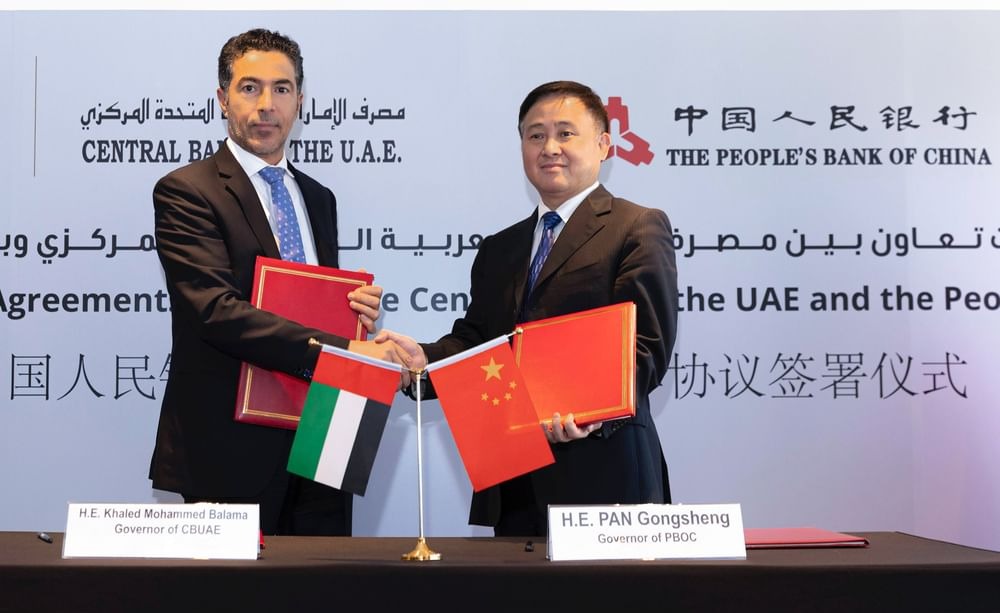
The United Arab Emirates is actively seeking to establish a currency swap agreement with the United States. Hassan Malik, the Director of Geopolitical Strategies at Tilmer, emphasized that this initiative serves as a safeguard against worst-case scenarios rather than a signal of impending financial turmoil. In an interview with Bloomberg, Malik noted that such an agreement could act as a lifeline for the UAE should the Strait of Hormuz remain closed for an extended period.
This move is part of the UAE's broader economic strategies aimed at enhancing its financial stability amid rising geopolitical tensions in the region. The timing of this initiative is critical, as concerns grow regarding the impact of a potential closure of the Strait of Hormuz on global trade, particularly given the current circumstances in the area.
Details of the Initiative
The UAE is recognized as one of the largest economies in the region, playing a pivotal role in global trade. Malik pointed out that the inquiry into a currency swap agreement reflects the UAE's strategic awareness in addressing potential risks. Such agreements are considered effective tools for securing financial liquidity during critical times.
It is important to note that the Strait of Hormuz is one of the world's most vital maritime corridors, through which approximately 20% of the world's oil supply passes. Therefore, any closure of this strait could lead to significant economic repercussions for both oil-producing and consuming nations.
Background & Context
Historically, the region has experienced numerous political and military tensions that have affected trade flows. In recent years, several incidents in the Strait of Hormuz have heightened concerns regarding maritime security. The UAE has taken multiple steps to bolster its economic security, including diversifying its income sources and reducing its reliance on oil.
Additionally, the UAE is keen to strengthen its economic ties with the United States, which is considered a crucial strategic partner. These relations have facilitated increased American investments in the UAE, thereby contributing to the enhancement of the local economy.
Impact & Consequences
If a currency swap agreement is finalized, it could positively influence the stability of the UAE's economy by providing greater financial flexibility in the face of challenges. Furthermore, this initiative may bolster foreign investors' confidence in the UAE's economy.
Conversely, a closure of the Strait of Hormuz could lead to a rise in global oil prices, potentially impacting the global economy as a whole. Thus, the UAE is taking proactive measures to shield itself from these risks through initiatives like this agreement.
Regional Significance
This initiative is significant not only for the UAE but for the entire Arab region. Strengthening the financial stability of the UAE could have positive repercussions for neighboring countries, as the UAE's stability is a crucial factor in the region's overall stability. Moreover, any improvement in economic relations with the United States may enhance economic cooperation among Arab nations.
In conclusion, the UAE remains in a strategic position that allows it to take precautionary steps to protect its economy. The pursuit of a currency swap agreement with the United States reflects a forward-looking vision aimed at enhancing financial and economic stability amid increasing challenges.