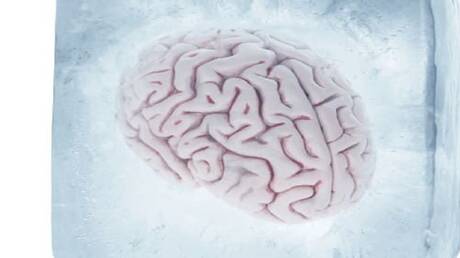
Chinese scientists have made a remarkable scientific achievement by developing a revolutionary chemical mixture that enables brain tissue to restore its functions after being frozen. This innovation, revealed in a report published by New Atlas, represents an important step towards a better understanding of how to manage neural tissues in medical emergencies.
This new technique is considered a revolution in the medical field, as it could help save lives and improve the quality of life for many patients suffering from complex neurological conditions. The ability to reactivate brain tissue after freezing could open doors to new treatments for a range of diseases, including strokes and brain injuries.
Details of the Breakthrough
According to the study, a special chemical mixture was used, consisting of materials capable of protecting nerve cells from damage caused by the freezing process. Experiments have shown that this mixture can maintain the integrity of nerve cells, allowing them to function again after thawing. These results enhance hopes for the potential use of this technique in clinical applications in the near future.
Research indicates that freezing can lead to permanent damage to neural tissues, but with this innovation, it may become possible to preserve brain functions even under harsh conditions. This development could change how doctors handle emergencies that require rapid interventions.
Background & Context
Over the decades, research in the field of neurology has sought to understand how to protect neural tissues from potential damage. Freezing has been considered one of the hazardous factors leading to loss of neurological functions. However, this new innovation highlights the importance of ongoing research in developing new techniques to improve treatment outcomes.
Historically, there have been numerous attempts to freeze living tissues, but most faced significant challenges in maintaining cell integrity. This innovation represents a qualitative leap in this field, allowing scientists to explore more therapeutic options.
Impact & Consequences
This innovation could have a significant impact on multiple fields, including organ transplantation and the treatment of neurological diseases. If this technique is successfully applied in clinics, it could improve healing chances for many patients. It may also contribute to reducing treatment costs, as tissues can be frozen for later use instead of relying solely on fresh tissues.
Moreover, this development could encourage further investments in research related to neurology, leading to new discoveries that may change how we address neurological diseases in the future.
Regional Significance
In light of the health challenges facing Arab countries, this innovation may represent an opportunity to enhance the capabilities of the healthcare system in the region. New technologies could contribute to improving healthcare, especially in emergency and neurological treatment fields.
Additionally, collaboration among Arab countries in scientific research could lead to the exchange of knowledge and experiences, strengthening the region's ability to face future health challenges.
The innovation achieved by Chinese scientists in reviving brain tissue after freezing represents an important step towards advancing the field of neurology. As research continues, we may be on the brink of a new era of treatments that could change the lives of millions.