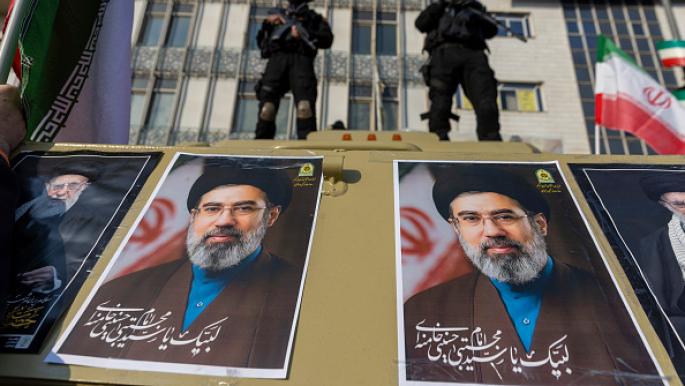
Iranian Supreme Leader's advisor, Mojtaba Khamenei, stated on Friday that controlling the strategic Strait of Hormuz is equivalent to possessing a 'nuclear bomb.' He explained that this strait is one of the most important waterways in the world, through which approximately 20% of the total global oil exports pass.
These remarks come at a time when tensions in the region are escalating, as the Iranian regime seeks to enhance its influence in the Arabian Gulf. Khamenei pointed out that any attempt to downplay the significance of the Strait of Hormuz will be met with decisive responses from Iran.
Details of the Event
The Strait of Hormuz, which separates Iran from Oman, is a vital transit point for oil and natural gas. In recent years, military tensions between Iran and the United States have increased, raising the importance of this waterway in the military and political strategies of both parties.
Khamenei's statements are part of Iran's policy aimed at strengthening its military presence in the region, asserting its control over vital maritime routes. He indicated that any threat to Iran's interests in this area would be met with strong reactions.
Background & Context
Historically, the Strait of Hormuz has been a focal point for political and military conflicts, witnessing numerous crises over the past decades. In the 1980s, the strait was the stage for the tanker war between Iran and Iraq, highlighting the importance of controlling it in regional conflicts.
In recent years, tensions between Iran and Western countries have escalated, especially following the United States' withdrawal from the Iranian nuclear agreement. This withdrawal has led to an increase in Iranian military activities in the region, making control over the Strait of Hormuz a matter of utmost strategic importance.
Impact & Consequences
Khamenei's statements serve as a clear warning to countries seeking to diminish Iranian influence in the region. Control over the Strait of Hormuz means the ability to manage global oil flow, which could impact oil prices and global markets.
If tensions continue to escalate, we may witness military responses from Iran, potentially leading to an escalation of conflict in the Arabian Gulf. This could significantly affect regional and international stability.
Regional Significance
The Gulf Arab states, particularly Saudi Arabia and the United Arab Emirates, are among the most affected by Khamenei's remarks. Any escalation in the region could impact oil exports and increase energy prices, affecting the global economy.
Moreover, these statements may lead to increased cooperation among Arab states to confront Iranian threats, potentially strengthening military and political alliances in the region.
In conclusion, the importance of the Strait of Hormuz emerges as a critical element in regional and international strategies. Iranian statements indicate that control over this waterway will remain a focal point of conflict in the near future.