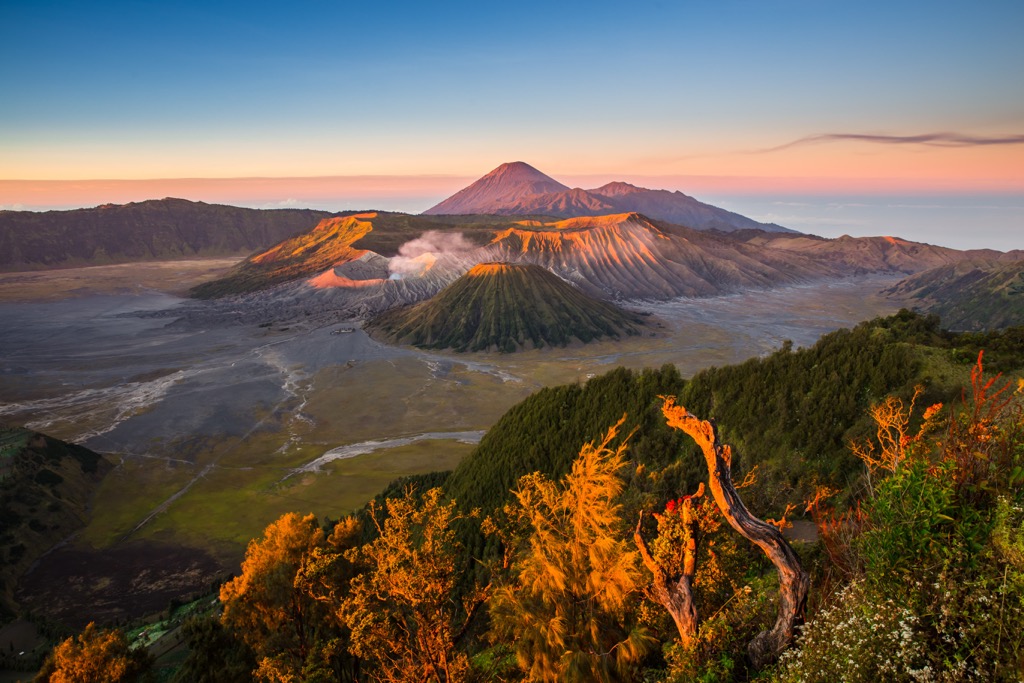
The management of Mount Bromo Tengger Semeru National Park (TNBTS) has announced the closure of the Mount Bromo area to visitors from April 6 to 12, 2026, as part of its efforts to restore the ecosystem and enhance the quality of tourism services. This decision follows a period of tourist congestion during the Eid al-Fitr holiday, where the area experienced a significant influx of visitors.
During the Eid al-Fitr holiday in March 2026, Mount Bromo welcomed approximately 24,671 tourists, raising the total number of visitors in March to 79,223. This figure is higher than the number of visitors in January and February, where the visitor count was 65,891 in January and 45,738 in February.
Details of the Closure
During the closure period, the park management will implement a series of activities, including cleaning the area after the Eid al-Fitr holiday. Workshops will also be held to train tourism transport service providers, such as jeep and horse drivers, in various locations around Mount Bromo. These activities aim to improve the level of services provided to visitors and raise environmental awareness among those working in the tourism sector.
The activities are scheduled to commence on April 6, with workshops organized on April 7 and 9, while a workshop to enhance the efficiency of transport service providers will take place on April 8. Additionally, social events will be organized to promote community participation in environmental conservation.
Background & Context
Mount Bromo is considered one of the most famous tourist destinations in Indonesia, renowned for its unique natural beauty and stunning landscapes. With the increasing number of visitors, environmental challenges have become more apparent, prompting the park management to take effective steps to ensure environmental sustainability. The temporary closure of the area is a strategic move to preserve biodiversity and enhance the tourist experience.
Historically, Mount Bromo has undergone numerous environmental changes due to intensive tourism activity. These changes have led to the degradation of some natural areas, necessitating urgent action to protect the environment. These initiatives reflect the Indonesian government's commitment to achieving a balance between tourism development and environmental conservation.
Impact & Consequences
This step is expected to contribute to improving the quality of tourism services and enhancing the visitor experience in the future. By focusing on ecosystem restoration, the area can become more attractive to tourists seeking unique natural experiences. Furthermore, these initiatives may encourage increased environmental awareness among visitors, thereby bolstering conservation efforts.
Moreover, improving tourism services can lead to increased economic revenues for the region, benefiting local communities. Promoting sustainable tourism can have positive impacts on the local economy and enhance job opportunities for residents.
Regional Significance
Ecotourism is an increasing trend worldwide, including in Arab countries. Arab nations can benefit from successful experiences in Indonesia to promote sustainable tourism in their natural areas. Preserving the environment and enhancing sustainable tourism can contribute to achieving sustainable development in the region.
In conclusion, the closure of Mount Bromo represents an important step towards achieving a balance between tourism and environmental conservation. These efforts reflect Indonesia's commitment to promoting sustainable tourism, which can serve as a model for other countries.