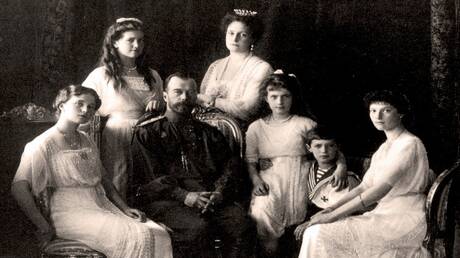
The wealth of Tsar Nicholas II, the last Tsar of Russia, is considered one of the historical legends that sparks curiosity among many around the world. While Jeff Bezos is classified today as one of the legends of wealth in modern times, the question arises: how does the billions of the owner of Amazon compare to the wealth of the Russian Tsar who ruled until 1917?
Estimates suggest that the wealth of Nicholas II was around 300 million rubles at that time, which is equivalent to about 15 billion dollars today. This wealth included palaces, vast lands, and valuable properties, making him one of the richest rulers in history. However, was this wealth real or merely a myth?
Event Details
The roots of the Tsar's wealth trace back to the periods when Russia experienced significant territorial and property expansion. Nicholas II, who ascended to the throne in 1894, enjoyed great power and immense wealth, yet he faced political and economic challenges that led to the collapse of his rule. Despite his wealth, he could not avoid the Russian Revolution that resulted in his overthrow in 1917.
In contrast, Jeff Bezos is regarded as a symbol of success in the digital age, having founded Amazon, which has become one of the largest companies in the world. His current wealth is estimated at around 200 billion dollars, making him one of the richest individuals in history. But how can his wealth be compared to that of the Tsar?
Background & Context
Historically, the wealth of Russian Tsars was derived from a variety of sources, including taxes, trade, and natural resources. While Bezos's wealth heavily relies on innovation and technology, Nicholas II's wealth was closely tied to the political and economic power he wielded. This difference in sources reflects the disparities between eras and economic systems.
Moreover, the social and political circumstances experienced by both Bezos and Nicholas II differ significantly. While Bezos lives in an era characterized by technology and innovation, Nicholas II ruled during a time when Russia was suffering from social and political turmoil.
Impact & Consequences
The comparison of the wealth of Tsars with that of contemporary businessmen illustrates how concepts of wealth and power have evolved over time. While Nicholas II's wealth reflected strength and influence, Bezos's wealth reflects innovation and the ability to adapt to rapid market changes.
This comparison also serves as a lesson in how economic and political conditions impact individual fortunes. While wealth can be immense, it does not guarantee stability or long-term success, as evidenced by the fate of Nicholas II.
Regional Significance
Studying the wealth of historical leaders and businessmen provides an important lesson for Arab countries, which are undergoing significant economic and political changes. Just as the wealth of the Tsars was linked to power and influence, current wealth in the Arab world is influenced by investments and technology.
This comparison highlights the importance of innovation and adaptability in achieving economic success, which can serve as a lesson for Arab nations striving to enhance their economies in the era of globalization.
In conclusion, comparing the wealth of Tsar Nicholas II with that of Jeff Bezos opens new horizons for understanding how wealth has evolved over the ages. While the wealth of the Tsars reflected power and influence, contemporary wealth reflects innovation and the ability to adapt to rapid changes in the world.