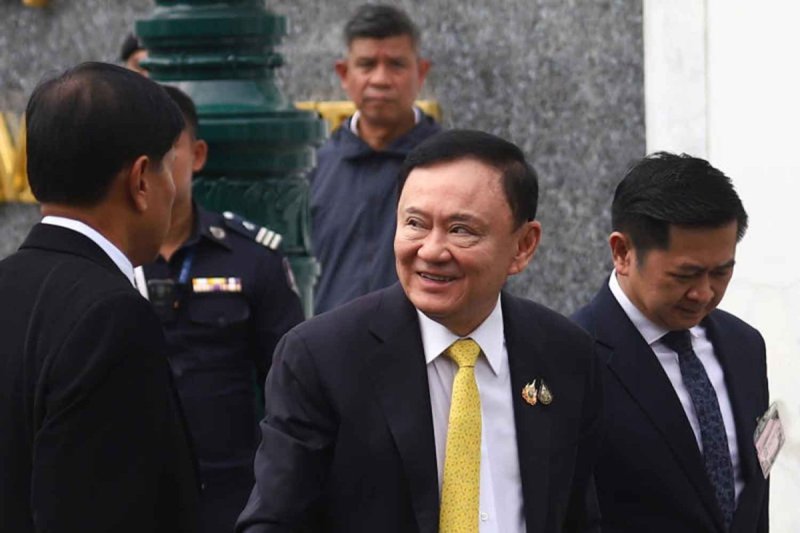
The Thai Ministry of Justice has decided to grant conditional release to former Prime Minister Thaksin Shinawatra, with his release set for May 11. This decision came after a meeting of the parole committee that reviewed over 500 eligible prisoners in the country.
The committee was chaired by Tharini Saengsawang, Deputy Permanent Secretary of the Ministry, who confirmed that Shinawatra, aged 76, qualifies for conditional release due to his health condition, which necessitates not wearing an electronic tracking device.
Details of the Release
Shinawatra is currently held at Klong Prem Central Prison, where he has been incarcerated since September 9 of last year after the Supreme Court sentenced him to one year in prison for abuse of power and conflict of interest during his premiership prior to 2006.
The court did not recognize his long stay in a special wing of the police hospital as time served, which has led to the continuation of his sentence. As his release date approaches, he will have served two-thirds of his sentence, which is the minimum required for conditional release.
Background & Context
Thaksin Shinawatra's tenure is one of the most controversial periods in modern Thai history, marked by sharp political divisions and conflicts between his supporters and opponents. He served as Prime Minister from 2001 until 2006, when he was ousted in a military coup, and since then, he has become a polarizing figure in Thai politics.
After his ousting, Shinawatra lived in exile for a long period before returning to Thailand in 2022, where he was immediately arrested. His case raises many questions about political justice in the country and how the judicial system handles prominent political figures.
Impact & Consequences
The conditional release of Shinawatra is seen as a step that could reshape the political landscape in Thailand. Some analysts believe this move may help ease the tense political situation, while others argue it could escalate tensions between Shinawatra's supporters and opponents. Additionally, his release may pave the way for his return to the political arena, potentially influencing the upcoming elections in the country.
As the political climate in Thailand remains volatile, the implications of Shinawatra's conditional release could be significant, affecting not only his political future but also the broader dynamics of Thai governance.
Regional Significance
This decision is not only crucial for Thailand but also holds regional significance as it reflects the ongoing struggles within Southeast Asian politics regarding leadership, governance, and the rule of law. The response from the public and political factions to Shinawatra's release could set a precedent for how similar cases are handled in the future.
In conclusion, the conditional release of Thaksin Shinawatra marks a pivotal moment in Thai politics, with potential ramifications for stability in the region and the future of political discourse in Thailand.