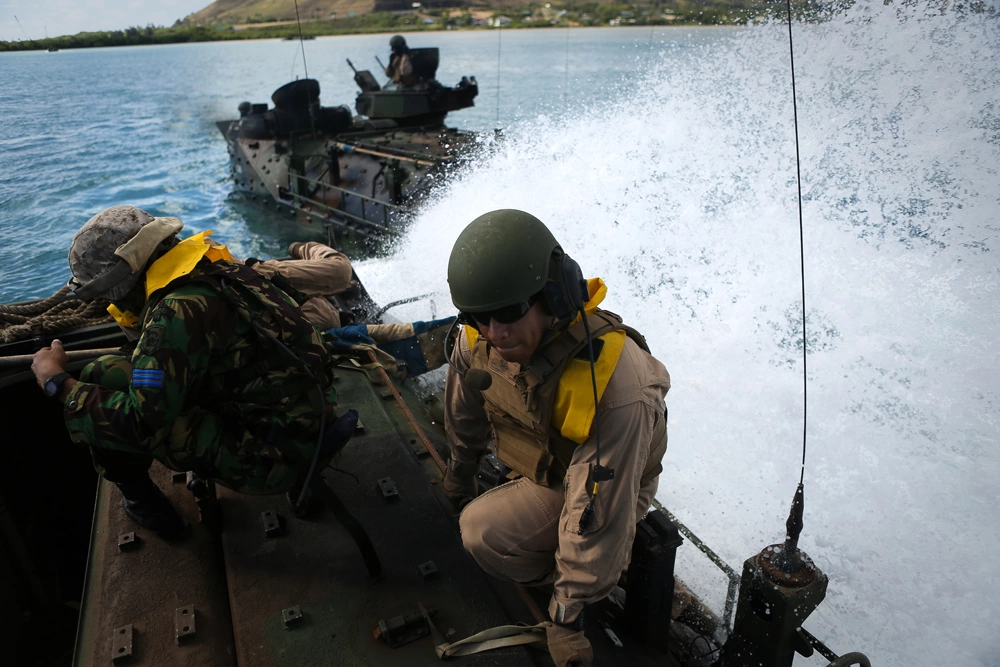
The Second Marine Battalion (Menkav 2 Marinir) executed intensive training on amphibious operations at the Panongan coast in Situbondo, Indonesia, under the supervision of Colonel Iwan Permana. The aim of this training is to enhance the combat readiness of the Indonesian naval forces.
Colonel Permana confirmed that this training is part of a comprehensive training program known as "Basic Unit Training," which is being implemented in the first quarter of 2026. He highlighted the importance of this training in raising the level of professionalism and readiness to face diverse military challenges.
Training Details and Scenarios
The training included realistic scenarios designed to cover all aspects of amphibious operations, from ship movements to artillery firing operations. Emphasis was placed on the importance of coordination among different military units to ensure the success of the operations.
Colonel Permana also stressed the necessity of full commitment from soldiers during all stages of training, as it requires precision and speed in performance, along with effective coordination among all participating elements.
Background & Context
Indonesia is considered one of the largest maritime nations in the world, necessitating the enhancement of its naval capabilities to protect its national interests. In light of increasing regional tensions, this training gains particular importance in strengthening military maritime capabilities.
The Indonesian government recognizes the strategic need to bolster its military readiness, especially in the face of potential threats in the region. This commitment is reflected in the ongoing training programs aimed at improving operational effectiveness.
Impact & Consequences
This training is a strategic step to improve Indonesia's ability to confront security challenges, especially amid rising tensions in the South China Sea. By enhancing the level of training and readiness, Indonesia aims to protect its national sovereignty and strengthen military cooperation with other countries.
As Indonesia continues to develop its military capabilities, the implications of these exercises extend beyond national defense, contributing to regional stability and security. This proactive approach is essential in a time of geopolitical uncertainty.
Regional Significance
The significance of these exercises is underscored by the current geopolitical landscape, where maritime security is increasingly critical. Indonesia's efforts to enhance its naval capabilities are not only vital for its own national security but also play a crucial role in the broader context of regional stability.
In conclusion, the intensive training conducted by the Second Marine Battalion reflects Indonesia's commitment to strengthening its military capabilities, which contributes to regional stability and enhances security in the area.