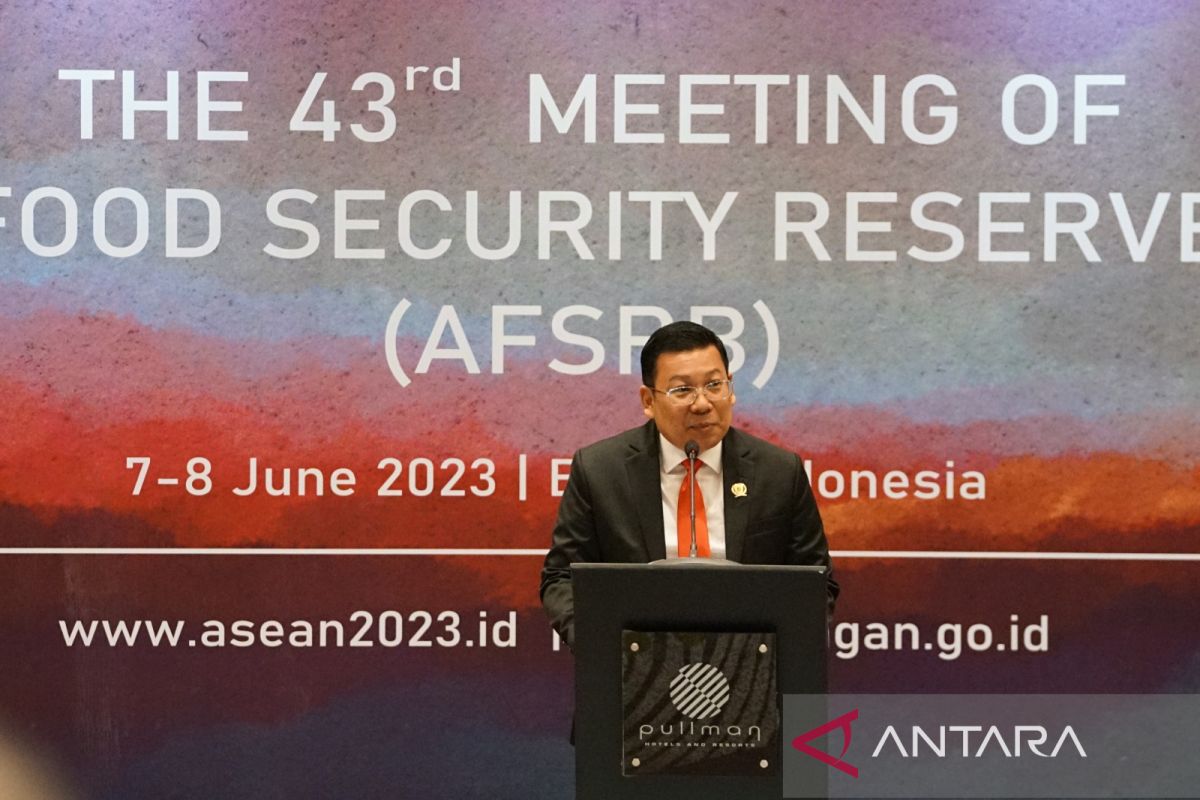
The National Food Agency of Indonesia (Bapanas) has affirmed that the increasing geopolitical tensions in the Hormuz Strait will not impact the availability of 11 strategic food commodities. This statement was made by the agency's secretary, Sarwa Edi, who emphasized that the country's food stocks remain secure.
Sarwa explained that the government ensures the stability of food supplies, noting that any disruptions in international trade routes have not significantly affected national food security. He confirmed that all strategic food commodities are available in sufficient quantities, and imports are sourced from countries not affected by conflicts in the region.
Details of the Situation
In discussions with participants in a training course for senior police leadership, Sarwa indicated that Indonesia expects to maintain a surplus in food stocks until June 2026. He assured that the commodities requiring imports do not come from the Middle East, thereby reducing the potential impact of tensions in Hormuz.
He also pointed out that Indonesia imports certain food items such as soybeans from the United States, beef from India, lamb from Australia, and garlic from China. He confirmed that distribution routes do not pass through the Hormuz Strait, minimizing the effect on food supplies.
Background & Context
Indonesia is one of the largest food-importing countries globally, relying on imports for certain products to meet its needs. In recent years, the country has made significant progress towards achieving self-sufficiency in many food commodities, with imports dropping to less than 5% of total national production.
Historically, the Hormuz Strait has experienced recurring tensions due to regional conflicts, impacting global trade flows. However, it appears that Indonesia has managed to reduce its reliance on goods from this region, reflecting its strategy to enhance food security.
Impact & Consequences
These statements are significant in the context of global tensions, showcasing Indonesia's ability to effectively manage its food resources. Additionally, the stability of prices in the domestic market reflects the government's success in addressing economic challenges.
Data indicates that the price development index shows continuous improvement, with a decrease in the number of provinces experiencing price increases. This suggests that the government is actively working to maintain price stability and ensure the availability of essential goods.
Regional Significance
The Middle East is one of the regions most affected by geopolitical tensions, with events in the Hormuz Strait influencing global trade. However, Indonesia's stability in this context may serve as a model for Arab countries on how to achieve food security.
Given the challenges faced by Arab nations, they could benefit from Indonesia's experience in enhancing local production and reducing reliance on imports from volatile regions.