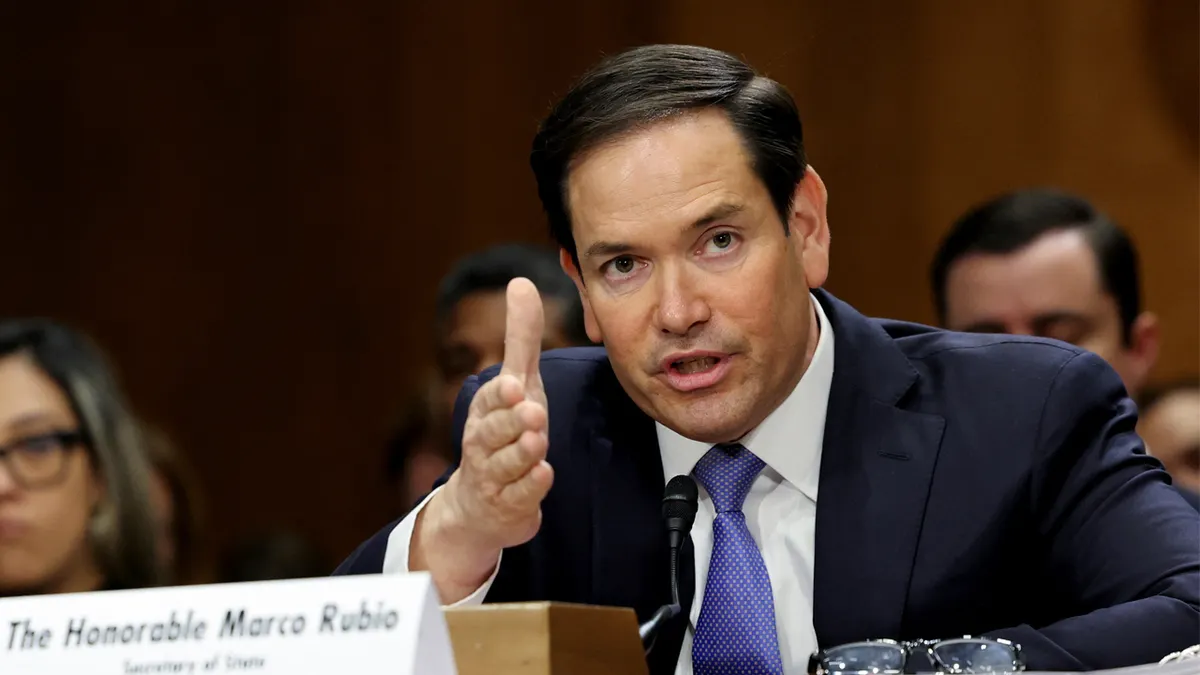
U.S. Secretary of State Marco Rubio stated in his remarks on Wednesday that the attack on Iran came at a "critical time," as the international community seeks to prevent Tehran from bolstering its military capabilities. Rubio explained that these capabilities could render Iran's nuclear program beyond any future deterrent capacity, posing a threat to both regional and international security.
Rubio's statements come amid escalating tensions between the United States and Iran, with Washington accusing Tehran of attempting to develop a nuclear program that could lead to the production of nuclear weapons. This issue is considered one of the most sensitive in international politics, affecting relations between many countries in the region.
Details of the Incident
In the context of these statements, Rubio noted that the United States is committed to preventing Iran from achieving advanced military capabilities. He affirmed that recent military actions aim to enhance U.S. national security and protect Washington's allies in the region, particularly Israel and the Gulf Arab states.
He also added that the attack on Iran is not merely a reaction to Tehran's actions but is part of a comprehensive strategy aimed at maintaining stability in the Middle East. This strategy is deemed essential in light of the increasing threats posed by Iranian-backed armed groups.
Background & Context
Historically, U.S.-Iran relations have seen increasing tensions since the Islamic Revolution in 1979. These tensions have led to a series of military and economic conflicts, including economic sanctions imposed by Washington on Tehran.
In recent years, concerns have escalated regarding Iran's nuclear program, with Western countries accusing Tehran of attempting to develop nuclear weapons under the guise of a civilian program. These concerns have led to complex international negotiations, including the nuclear agreement reached in 2015, from which the United States withdrew in 2018.
Impact & Consequences
Many analyses predict that Rubio's recent statements will escalate tensions between the United States and Iran, potentially impacting regional security. These tensions could provoke reactions from Iran, which may take escalatory steps in the region, increasing the risk of military conflict.
Additionally, these developments could affect oil prices and financial markets, as Iran is one of the largest oil producers in the world. Any escalation in the conflict could lead to rising oil prices, impacting the global economy.
Regional Significance
Considering the impact of these events on the Arab region, many Arab countries are concerned about the rising tensions between the United States and Iran. Countries like Saudi Arabia and the United Arab Emirates view Iran as a threat to their national security, and any escalation in the conflict could have negative repercussions on the stability of the region.
Furthermore, U.S. military actions could enhance security cooperation between Arab states and the United States, potentially altering the power dynamics in the region. However, any escalation could also exacerbate humanitarian and political crises in neighboring countries.
In conclusion, the situation in Iran remains a focal point of international interest, with increasing fears of potential conflict escalation. The current moment is critical in determining the future of U.S.-Iran relations and its impact on security and stability in the region.