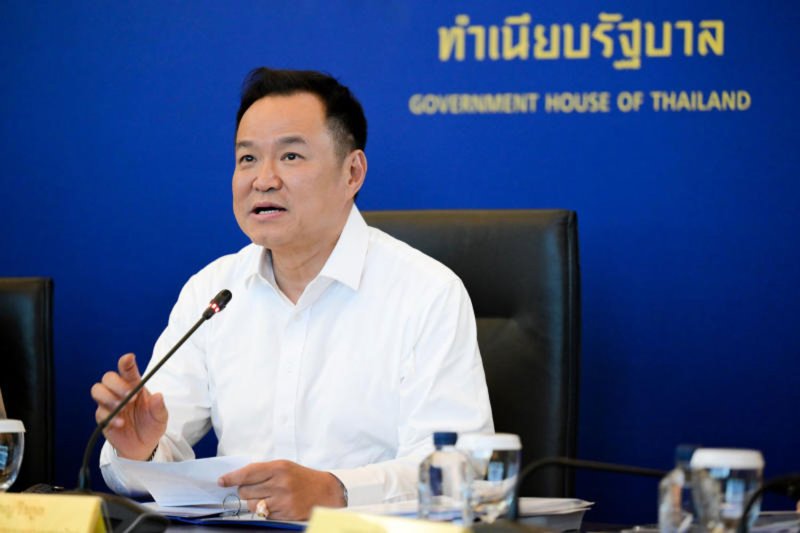
Thai Prime Minister Anutin Charnvirakul confirmed that the list of new ministers will be submitted for royal approval on Monday, after resolving all issues related to the qualifications of the candidates. He explained during a press conference on Saturday morning that the vetting process for all proposed names has been completed without any outstanding concerns.
Anutin stated, "I have already received the names of candidates from all coalition parties and have vetted them to ensure there are no constitutional exclusions. There were some issues related to certain individuals previously, but they have now been resolved." He added that a final meeting with relevant parties will be held on Monday to ensure that all qualifications are in order.
Details of the Event
A source from the Palang Pracharath Party reported that background checks and qualification reviews for potential ministers in the new government were completed on Friday. The process was delayed due to issues concerning the deputy leader of the Future Forward Party, Sudawan Wangsuphaekitkosol, who was the only one facing problems.
In response, the Future Forward Party submitted three alternative names for vetting: Nikorn Suimklang, Wit Chaiyaron, and Katya Suatdeepol. All three names were approved, but the final decision was to appoint Nikorn, a representative from Nakhon Ratchasima and the husband of Sudawan, as the Minister of Social Development and Human Security. Meanwhile, Katya and Wit were listed as alternates.
Background & Context
This step is part of the process of forming a new government following the elections held in Thailand, which saw intense competition among political parties. The Palang Pracharath Party received support from several other parties to form a coalition government, reflecting the often complex dynamics of Thai politics.
Historically, Thailand has witnessed numerous government changes, with its politics significantly influenced by social and economic shifts. There have been increasing calls for political and social reforms, placing the new government before major challenges in achieving stability and improving the living conditions of citizens.
Impact & Consequences
The formation of the new government could have significant implications for Thailand's domestic and foreign policies. The new government is expected to focus on social and economic development issues, especially given the challenges the country faces in areas such as poverty and unemployment.
Moreover, the presence of ministers from diverse backgrounds may enhance the government's ability to address complex issues, but it may also face criticism if it fails to meet expectations. The success of the new government largely depends on its ability to balance the various interests of the parties that comprise it.
Regional Significance
Although Thailand is far from the Arab world, political events there may impact economic and trade relations with Arab countries. Thailand is considered one of the preferred tourist destinations for many Arabs, and any changes in government could affect tourism policies.
Furthermore, political stability in Thailand may influence Arab investments in the country, making it important to monitor the developments of the new government and its impact on bilateral relations.