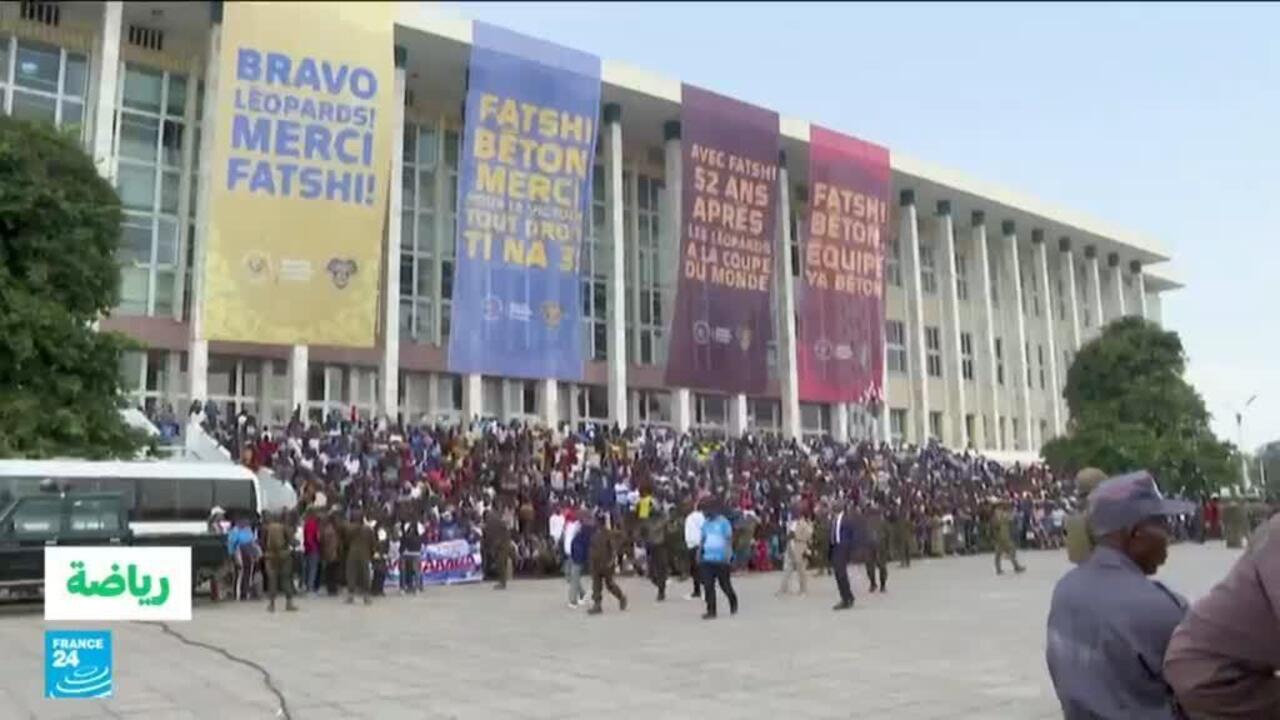
The Congolese national team, nicknamed the Leopards, has secured its place in the 2026 World Cup finals after defeating Jamaica 1-0 in an exciting match held in Guadalajara, Mexico. The qualifying goal came in extra time, granting the team a ticket to the World Cup following a strong and persistent performance.
Immediately after the match, celebrations erupted in the streets of Kinshasa, the capital of the Democratic Republic of the Congo, where thousands of fans gathered to celebrate this historic achievement. The streets were filled with revelers honking car horns and banging pots and pans, creating an atmosphere of joy and excitement in a city with a population of around 17 million.
Match Details
The match was part of the continental playoff for World Cup qualification, where the Congolese team needed a victory to ensure their place. The players displayed a high fighting spirit, managing to control the flow of the game despite the immense pressure from the opposing team. The goal scored by one of the players in the final minute of extra time was like a dream come true for Congolese fans.
This moment is historic for the Democratic Republic of the Congo, as qualifying for the World Cup represents a significant achievement in the country's football history. This success reflects ongoing efforts to develop the sport in the Congo, where investments have been made in sports infrastructure and training local players.
Background & Context
The history of football in the Democratic Republic of the Congo is fraught with challenges, as the country has suffered from political and economic conflicts that have impacted sports. Nevertheless, the Congolese team has made remarkable progress in recent years, participating in several continental tournaments and achieving positive results. This qualification for the 2026 World Cup comes after years of hard work and dedication from the players and coaching staff.
It is worth noting that the Congolese team previously participated in the World Cup in 1974, but this qualification represents a new opportunity to make an impact on the global stage. Success in this tournament could enhance the Congo's status in the world of football.
Impact & Consequences
The qualification of the Congolese team for the 2026 World Cup marks a turning point in the history of sports in the country, as this achievement could lead to increased support and investment in football. Additionally, the team's success may inspire new generations of players, encouraging them to pursue their dreams in the world of football.
Furthermore, this qualification could help improve the image of the Democratic Republic of the Congo on the international stage, as the country may be viewed positively through its sporting achievements. Success in the World Cup could also open new doors for sports and cultural cooperation with other nations.
Regional Significance
The qualification of the Congolese team for the 2026 World Cup is an important event not only for the Congo but also for the Arab region. This achievement reflects the development of football in African countries and encourages Arab nations to enhance their investments in sports. Moreover, the success of African teams in global tournaments can help strengthen relations between Arab and African countries.
In conclusion, the qualification of the Congolese team for the 2026 World Cup is a historic achievement that reflects the significant efforts made to develop football in the country. This moment is not just a sports victory; it is also an opportunity to enhance national pride and unity among Congolese fans.