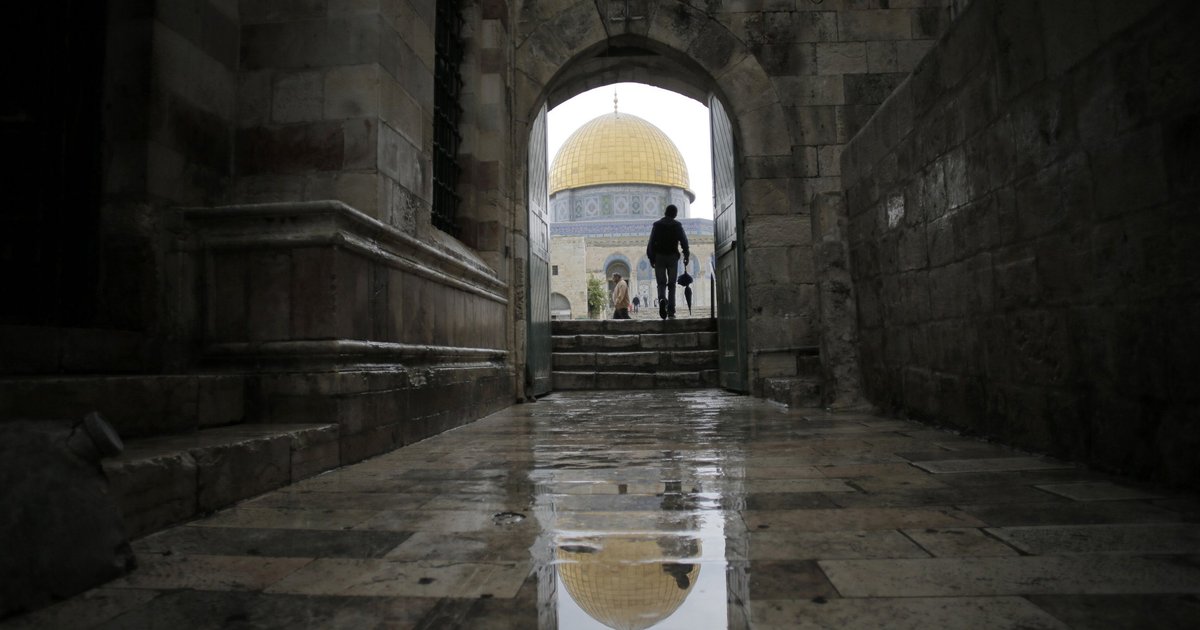
Israeli occupation authorities continue to close the blessed Al-Aqsa Mosque for the thirtieth consecutive day, preventing worshipers from accessing it under the pretext of the state of emergency in the country due to the Israeli-American war on Iran, which began on February 28.
The authorities announced that the closure of Al-Aqsa Mosque would continue until April 15, 2026, in what is considered the longest closure since the occupation of Jerusalem in 1967, according to Islamic endowments in the city.
Details of the Event
Videos circulated on social media showed restrictions that prevented the last Friday prayer from being held at Al-Aqsa Mosque, as Israeli police were heavily deployed at the entrances of the Old City and the mosque gates, forcing hundreds to pray in nearby streets.
Activists documented a video showing an elderly man in the Old City calling on citizens and worshipers: "Al-Aqsa is calling you, Al-Aqsa is in danger, make your way to Al-Aqsa, march towards Al-Aqsa."
Background & Context
The restrictive measures were not limited to Muslims but also affected Christian holy sites, as the Church of the Holy Sepulchre remained closed to worshipers and visitors, reflecting a comprehensive policy to isolate the holy city from its surroundings. As a full month has passed since the closure of Al-Aqsa Mosque, activists and bloggers on social media continued to express their rejection and protest, emphasizing their condemnation of preventing worshipers from accessing the blessed mosque.
Twitter users pointed out that the reasons and justifications provided by the occupation authorities for closing Al-Aqsa Mosque are flimsy and false, with one writing: "It’s almost unbelievable, the blessed Al-Aqsa Mosque has been closed for 30 days, no prayers are held, and no calls to prayer are raised, while the nation sleeps as if it sees and hears nothing, what a betrayal this is."
Impact & Consequences
Observers noted that the silence and the absence of an effective Arab and Islamic stance encouraged the occupation to extend the closure of Al-Aqsa Mosque, despite the fact that the excuse of "state of emergency" does not apply to other mosques, sites, and areas in Jerusalem. Activists and specialists warned that Al-Aqsa Mosque is going through one of its most dangerous phases in decades, amid the occupation government's attempts to impose a new reality by extending the hours of incursions to 9 hours daily for Jews, compared to 9 hours for Muslims, in an attempt to establish "equal division" within Al-Aqsa Mosque.
They added that preparations for imposing complete temporal division include making the Jewish presence a permanent part of the daily program inside Al-Aqsa, paving the way for larger changes in the religious function of the place.
Regional Significance
Israeli movements indicate a clear intention to control Al-Aqsa Mosque, which could lead to escalating tensions in the region. The continuation of this situation may contribute to fueling feelings of anger among Palestinians and Arabs, reflecting a state of frustration towards the Arab and international positions on the Palestinian issue.
In conclusion, Al-Aqsa Mosque remains a symbol of Jerusalem and Islam, and it needs real support from Arab and Islamic countries to protect it from attempts at Judaization and division.