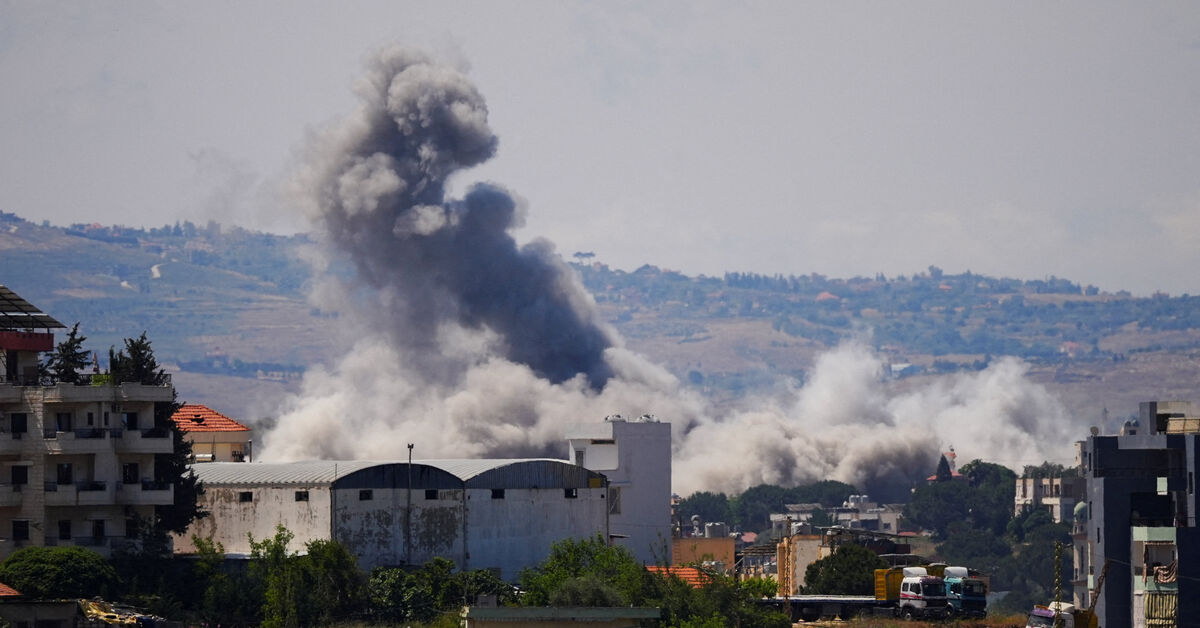
Civilians in southern Lebanon are experiencing a sharp escalation in violence, facing forced evacuations and ongoing Israeli airstrikes. Despite the ceasefire brokered by the United States on April 16, families are still compelled to leave their homes amid rising military operations.
Reports indicate that the ceasefire, announced after nearly six weeks of fighting, has not halted violence between the two sides. Both Israel and Hezbollah are conducting daily attacks, exchanging accusations of violating the agreement. This situation places civilians in a perilous position, exacerbating their suffering in the absence of security.
Details of the Incident
Events in Lebanon are accelerating as Israeli forces continue military operations in southern regions, leading to a significant displacement of the population. Reports show that Israeli airstrikes are targeting civilian areas, increasing chaos and panic among the residents.
Simultaneously, Hezbollah is demonstrating strong reactions, continuing to target Israeli sites, reflecting the rising tensions between the two parties. It appears that the ceasefire reached has not been sufficient to stop the cycle of violence, raising concerns about the future stability of Lebanon.
Background & Context
Historically, Lebanon has witnessed numerous armed conflicts, with the struggle between Israel and Hezbollah being one of the most prominent. Since 2006, when the July War erupted, relations between the two sides have been tense, with clashes recurring from time to time. The political and economic conditions in Lebanon have contributed to worsening humanitarian crises, making civilians vulnerable to violence.
It is noteworthy that the situation in Lebanon is not isolated; it is influenced by regional and international developments. The conflict in Syria and the impacts of other regional disputes play a role in complicating the situation in Lebanon, making it increasingly difficult to reach lasting solutions.
Impact & Consequences
The repercussions of violence in Lebanon extend beyond its borders, affecting regional stability. As fighting continues, the number of displaced individuals is rising, placing additional pressure on neighboring countries hosting refugees. Furthermore, the ongoing violence could escalate tensions among regional and international powers, threatening security in the area.
Moreover, the continuation of military operations may negatively impact Lebanon's struggling economy, as the country faces crippling economic crises. With the increasing number of displaced individuals, the need for humanitarian aid is growing, adding to the burden on the Lebanese government.
Regional Significance
The situation in Lebanon serves as an indicator of rising tensions in the Arab region, where political and military interests intersect. The ongoing violence in Lebanon could have negative repercussions for neighboring countries, such as Syria and Palestine, where clashes may reignite and humanitarian crises may escalate.
Ultimately, the situation in Lebanon requires urgent international attention, as the global community must work towards finding lasting solutions to the conflict and providing support for civilians suffering from the effects of the strife. Stability in Lebanon is an integral part of regional stability, and joint efforts are necessary to achieve peace and security in the area.