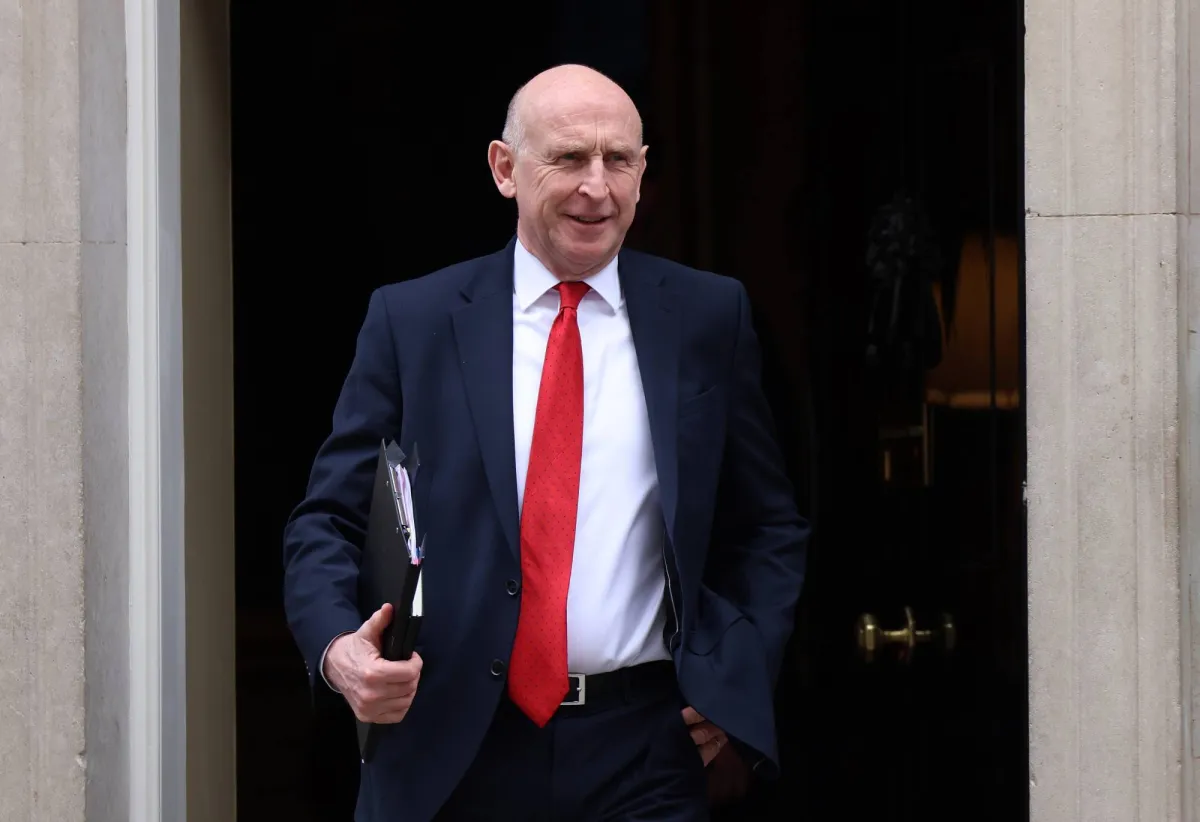
British Defense Minister John Healey revealed that UK intelligence strongly suggests that Moscow is still providing support in the field of drones to Tehran. In an interview with the newspaper "Al-Sharq Al-Awsat", Healey stated that Russia has supplied Iran with intelligence information and training that includes drone technology and operations, as well as electronic warfare, noting that this cooperation "is still ongoing".
Healey also did not rule out the presence of a "hidden Russian hand" behind some Iranian tactics in the region, reflecting the depth of relations between Moscow and Tehran in various fields.
Details of the Event
Commenting on his recent visit to Riyadh, Healey confirmed that the relationship between Saudi Arabia and the UK is "close and long-standing", indicating that it has evolved into a modern partnership that responds to contemporary challenges. He explained that his country has deployed additional air defense systems to counter "random Iranian attacks", with British forces having conducted over 1,200 hours of flight in defensive missions, alongside more than 80 engagements since the conflict began.
Healey pointed out that the United Kingdom has about 1,000 troops deployed in the Middle East, in addition to 500 personnel in Cyprus, reflecting London’s commitment to enhancing its military presence in the region.
Context and Background
Healey's statements come at a sensitive time when the region is witnessing escalating tensions, especially with the ongoing conflict in Iran. Reports have shown that cooperation between Russia and Iran in the field of drones has significantly increased, raising concerns about the use of this technology in regional conflicts.
Moreover, Russian support for Tehran reflects Moscow's strategy to enhance its influence in the Middle East, as it seeks to expand its sphere of influence at the expense of Western interests. The relationship between Russia and Iran has seen notable developments in recent years, particularly in the fields of defense and security.
Consequences and Impact
The continued Russian support for Iran could exacerbate conditions in the region, as Tehran may use advanced technology to carry out military operations against its adversaries. This cooperation could enhance Iran's capability to conduct drone attacks, increasing tensions with neighboring countries.
Furthermore, the enhancement of the British military presence in the region comes as part of London’s response to growing security challenges, which could lead to further escalation in regional conflicts.
Impact on the Arab Region
Recent developments indicate that the Arab region may face new challenges as a result of Russian-Iranian cooperation. With the increasing military capabilities of Iran, neighboring Arab countries may feel greater threats, necessitating enhanced security cooperation among them.
Additionally, defense relations between the UK and Saudi Arabia may gain special importance under these circumstances, as they could contribute to strengthening regional security and providing necessary support to face common challenges.
In conclusion, the situation in the Middle East appears to require a coordinated response from Arab countries to address the challenges arising from Russian-Iranian cooperation, necessitating the strengthening of security partnerships and regional cooperation.