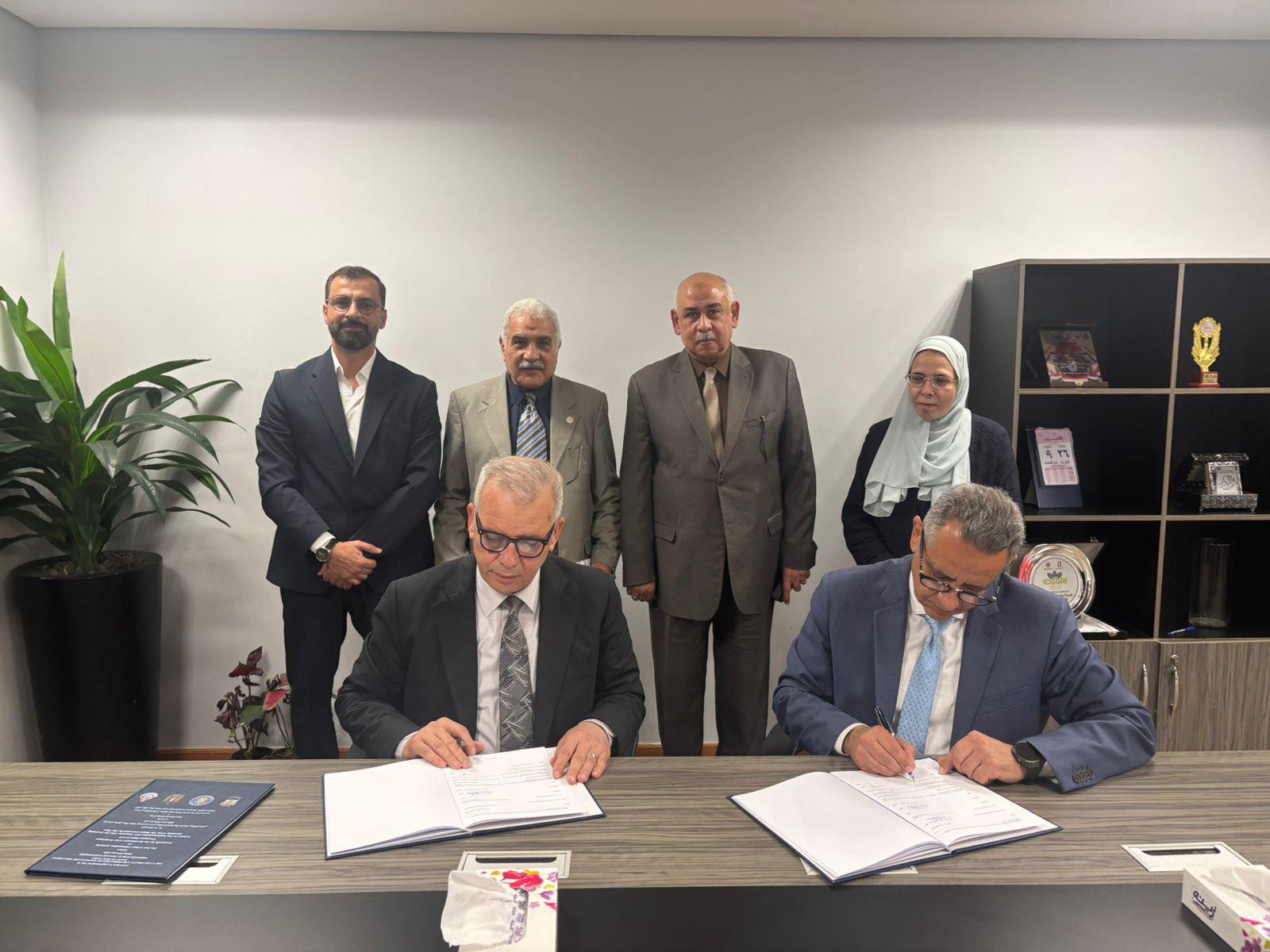
The New Urban Communities Authority – Utilities Sector – has signed a complementary contract with the Orasqualia consortium, which includes Egypt's Orascom and Spain's Aqualia, to implement advanced gas generators at the wastewater treatment plant in New Cairo. This project aligns with the state's direction towards promoting sustainability concepts and expanding partnerships with the private sector through a Public-Private Partnership (PPP) system.
The project aims to utilize methane gas produced from sludge treatment to generate clean electricity used to operate the plant, contributing to reducing carbon emissions and mitigating odors associated with treatment processes, in addition to improving operational efficiency.
Event Details
Dr. Mohamed Hassan Mustafa, head of the Drinking Water and Sanitation Regulatory Authority, confirmed that the authority plays a pivotal role in monitoring public-private partnership projects through technical and economic oversight to ensure operators adhere to quality standards and performance efficiency. Engineer Ahmed Ali, Vice President of the New Urban Communities Authority for Utilities and Network Maintenance, stated that the project is expected to produce between 13,000 to 15,000 cubic meters of gas daily, enabling the generation of electricity that covers about 60% of the plant's needs, achieving an annual savings estimated between 15 and 18 million Egyptian pounds on the electricity consumption bill.
Ali added that economic feasibility studies indicate the potential to recover the full investment cost of the generators within a period ranging from 5 to 7 years, reflecting the project's viability as a leading model in maximizing investment efficiency in infrastructure.
Background & Context
This project is part of ongoing efforts to develop the operation of treatment plants and transform them into integrated facilities that combine environmental efficiency and operational effectiveness, in line with global standards and enhancing sustainability in the utilities sector. This step is part of the state's strategy to achieve sustainable development and improve the quality of services provided to citizens.
The Egyptian government aims to strike a balance between economic growth and environmental preservation, making such projects essential amid current environmental challenges. Additionally, collaboration with the private sector reflects the state's desire to attract foreign and local investments in infrastructure projects.
Impact & Consequences
The project is expected to improve energy efficiency used in the wastewater treatment plant, leading to reduced operational costs and increased reliance on renewable energy sources. It will also help decrease carbon emissions, contributing to improved air quality in the area.
This initiative serves as a model for how to sustainably exploit natural resources, potentially encouraging other countries in the region to adopt similar projects. Furthermore, the success of this project may open the door for more public-private partnerships in renewable energy sectors.
Regional Significance
This project represents an important step in enhancing cooperation among Arab countries in the field of sustainable energy, as successful experiences in Egypt can serve as a model for other nations. Improving energy efficiency in Egypt may also contribute to strengthening energy security in the region.
In conclusion, the methane gas power generation project in New Cairo exemplifies how to integrate sustainability with innovation in the utilities sector, opening new horizons for sustainable development in the region.