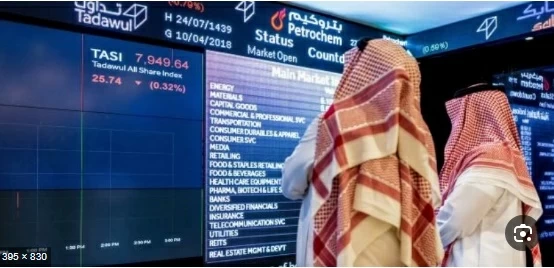
The Saudi stock market experienced positive movements today, with the main stock index rising by 11.44 points to reach 11,179.95 points. The total trading value in the market was 5.3 billion Saudi riyals, indicating a remarkable level of trading activity.
According to the daily economic bulletin from the Saudi Press Agency, the total number of shares traded reached 328 million shares, with 84 companies recording an increase in their share values, while shares of 178 other companies declined. These figures reflect a varied performance among the listed companies in the market.
Event Details
Shares of companies such as Um Al-Qura Cement, Saudi Chemical, UCI, Wafra, and Petro Rabigh topped the list of the most increased stocks, showing a significant rise in their values. Conversely, shares of companies like Al-Jamiah for Sports, Electrical Industries, Abu Muti, Naseej, and Nama Chemicals experienced the most declines, with fluctuations ranging between 10.00% and 9.96%.
In terms of trading activity, shares of Americana, Saudi Chemical, Kayan Saudi, Petro Rabigh, and The Kingdom were the most active in terms of volume traded, while shares of Al-Rajhi, Saudi Aramco, Saudi Chemical, Petro Rabigh, and Kayan Saudi led in terms of value.
Background & Context
The Saudi stock market is considered one of the largest financial markets in the region, playing a vital role in the national economy. Recently, the market has experienced fluctuations due to global and local economic changes, impacting the performance of listed companies.
The Saudi government aims to enhance the financial market by implementing economic reforms designed to attract foreign investments and increase transparency. These efforts are part of the Vision 2030 initiative, which seeks to diversify national income sources and reduce dependence on oil.
Impact & Consequences
The rise in the Saudi stock index is a positive indicator of investor confidence in the market, potentially attracting more investments. Additionally, the strong performance of certain companies reflects the robustness of various economic sectors, such as industry and services.
However, risks remain, as global economic factors, such as oil prices and geopolitical tensions, can affect market stability. Therefore, investors need to closely monitor developments.
Regional Significance
The Saudi financial market is pivotal in the region, influencing financial markets in other Gulf countries. The rise in the Saudi index may encourage neighboring markets to take similar steps to enhance financial performance.
Moreover, the success of the Saudi market in attracting investments can serve as a model for other Arab countries seeking to improve their business environments and boost economic growth.
In conclusion, the Saudi stock market remains under scrutiny, as investors look forward to further improvements and reforms that may enhance market stability and growth in the future.