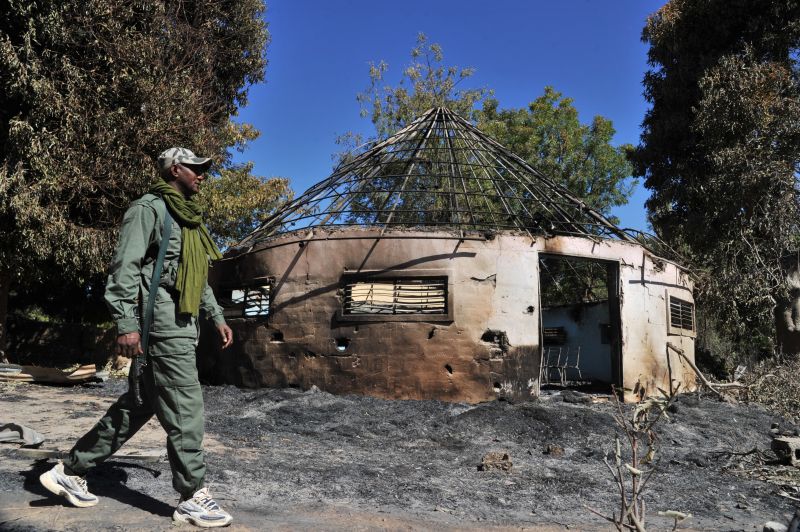
Malian Defense Minister Sadio Kamara was killed in an attack carried out by armed militants affiliated with the Support Group for Islam and Muslims, backed by Tuareg rebels, at his residence in the Kati military base near the capital, Bamako. This attack comes at a time when the Azawad Liberation Movement announced its control over the key city of Kidal in the northern part of the country.
The coordinated assaults that began last Saturday targeted the vicinity of Bamako and gold-producing areas, reflecting a notable escalation in military operations against the government led by the military. Gunfire echoed in the town of Kati, indicating that fighting continued for a second day, despite the army's announcement of re-establishing control.
Details of the Incident
A United Nations security memo reported the occurrence of “simultaneous complex attacks” in several areas, including Kati, Mopti, Gao, and Kidal. Initially, the army announced that it was under attack from unidentified “terrorist” groups, but videos on social media showed convoys of militants moving through the streets of Kati, heightening panic among residents.
Expert Ulf Leisinger, head of the Sahel program at the Konrad Adenauer Foundation, described the attacks as the largest of their kind in years. Government spokesman Issa Ousmane Koulibaly confirmed that 16 people were injured and announced a nighttime curfew for three days.
Background & Context
Mali is engulfed in rebel movements led by groups linked to Al-Qaeda and the Islamic State, in addition to a separatist rebellion in the north. The movement associated with the Tuaregs aims to establish an Azawad state and has managed to drive security forces out of the region before the collapse of the peace agreement signed in 2015.
Following the recent attacks, the movement declared its full control over Kidal, with reports indicating that they reached an agreement allowing the army and Russian African Legion soldiers to withdraw from the city. These developments suggest a potential escalation in the rebellion that began in 2012.
Impact & Consequences
The United Nations has called for an international response to the violence and terrorism in the Sahel region, with Secretary-General Antonio Guterres expressing deep concern over reports of the attacks. The United States condemned the terrorist attack and affirmed its solidarity with the Malian people and government, emphasizing its continued support for efforts to achieve peace and stability.
At the same time, the U.S. embassy in Mali issued warnings to its citizens, while the German embassy closed the airport and advised citizens to stay away from danger zones.
Regional Significance
These events serve as a warning to Arab countries regarding the rising security tensions in the Sahel region, which could impact regional stability. The increasing activity of armed groups highlights the need to enhance security cooperation among Arab states to confront common challenges.
In conclusion, the situation in Mali remains tense, necessitating an urgent international response to ensure security and stability in the country.