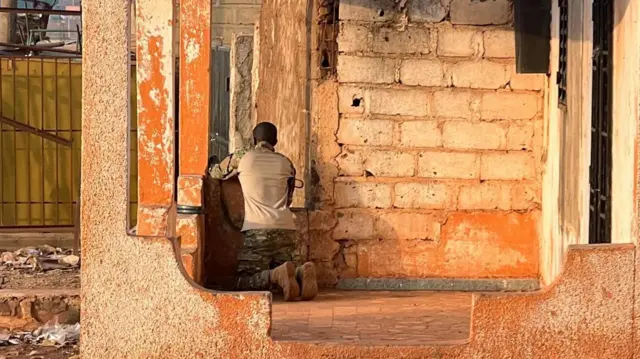
Mali has recently experienced a significant escalation in violence, with eyewitnesses reporting loud explosions and gunfire around the 'Kati' military base, which is one of the main military installations outside the capital, Bamako. Reports of coordinated attacks in several towns, including 'Gao' and 'Kidal' in the north and 'Sevare' in the center, raise concerns about the deteriorating security situation in the country.
These attacks come at a time when Mali is grappling with a rise in terrorist activities, as armed groups continue to carry out operations in various regions of the country. Some experts have indicated that these assaults may be part of a broader strategy aimed at destabilizing the transitional government, which is seeking to regain control over security conditions.
Details of the Incident
According to eyewitness accounts, loud explosions were heard in the vicinity of the 'Kati' military base, leading to chaos and panic among local residents. Heavy gunfire was also reported, reflecting an escalation in attacks targeting security forces. At the same time, reports emerged of assaults in the towns of 'Gao' and 'Kidal', where it is believed that armed groups executed coordinated operations in those areas.
The 'Kati' military base is considered a vital facility that plays an important role in military operations against armed groups. With the increase in attacks, concerns are growing about the ability of Malian forces to protect critical installations and secure residential areas.
Background & Context
Historically, Mali has witnessed a series of security and political crises, with conditions deteriorating in 2012 when armed groups seized control of the northern part of the country. Since then, the transitional government has attempted to regain control, but it has faced significant challenges from armed groups that exploit the chaos and instability.
In recent years, terrorist activities in Mali have increased, with groups such as 'Al-Qaeda' and 'ISIS' operating in the region. These activities have exacerbated the humanitarian situation, as residents suffer from a lack of basic services and displacement.
Impact & Consequences
These attacks could worsen the security situation in Mali, making it more difficult for the government to regain control of the country. The escalation of violence may also negatively impact international relations, as there may be increased pressure on the Malian government from the international community to address these groups.
Furthermore, the continuation of these attacks could exacerbate the humanitarian situation, as residents face the consequences of ongoing conflict. The number of internally displaced persons and refugees may rise, placing additional pressure on local and international resources.
Regional Significance
The situation in Mali is of particular importance to Arab countries, especially given the security challenges facing the region. An increase in terrorist activities in Mali could have negative repercussions for neighboring countries, as chaos may spread to other areas in West Africa.
Additionally, the situation in Mali could affect counter-terrorism efforts in the region, as many Arab and Western countries collaborate to combat extremist groups. Therefore, the stability of Mali is vital for ensuring regional security.
In conclusion, the situation in Mali remains complex, requiring effective intervention from both the government and the international community to ensure the country's stability and protect civilians from the ongoing violence.