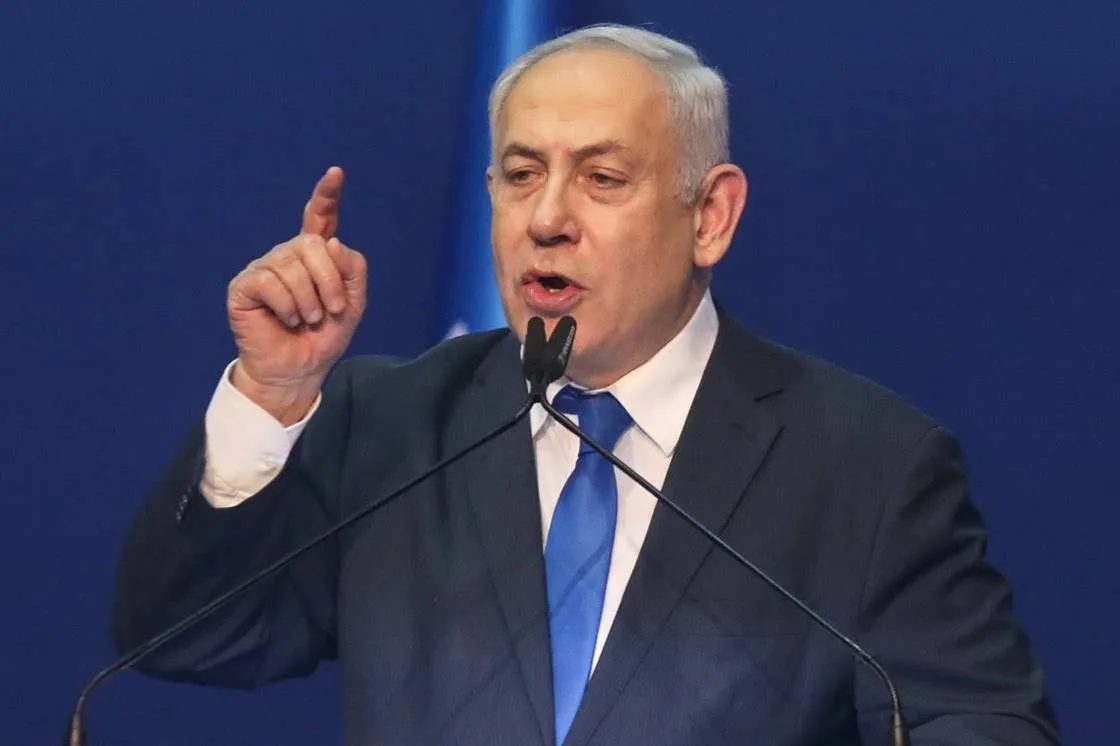
Israeli Prime Minister Benjamin Netanyahu issued orders on Saturday for the army to conduct strong attacks on Hezbollah targets in Lebanon after the Israeli army reported a violation of the ceasefire by the group. This decision comes at a sensitive time as involved parties seek to maintain the declared truce.
In an official statement, Netanyahu's office confirmed that he directed the army to strike Hezbollah targets forcefully, just two days after U.S. President Donald Trump announced a three-week extension of the ceasefire. Recent Israeli airstrikes have resulted in the deaths of six individuals in southern Lebanon, according to the Lebanese Ministry of Health.
Details of the Incident
The Lebanese Ministry of Health reported that Israeli airstrikes targeted a truck and a motorcycle in the town of Yahmour Al-Shuqif, resulting in the martyrdom of four citizens. Another strike on the town of Safad Al-Bateekh led to the deaths of two martyrs and injured 17 others. Consequently, the total number of fatalities from Israeli strikes across various areas of southern Lebanon since Friday has risen to 12.
In response, the Israeli army announced that it targeted three Hezbollah members who were traveling in a vehicle loaded with weaponry, as well as another member on a motorcycle. These military operations occur despite Trump's announcement of the ceasefire extension, complicating the security situation in the region.
Background & Context
The roots of the current tensions trace back to the recent war that erupted on March 2 after Hezbollah launched rockets at Israel in retaliation for the killing of Iranian leader Ali Khamenei during the U.S.-Israeli attack on Iran on February 28. Since then, the region has witnessed an escalation in military operations, with Israel conducting extensive airstrikes on Lebanon.
It is noteworthy that the recent conflict resulted in the deaths of 2,496 people and injuries to over 7,700 others in Lebanon, according to the latest toll published by the Ministry of Health. This military escalation occurs at a critical time as the international community seeks diplomatic solutions to the ongoing crisis.
Impact & Consequences
Concerns are growing that these attacks could lead to a greater escalation in the conflict between Israel and Hezbollah, potentially affecting stability in Lebanon and the broader region. The continuation of military operations may hinder peace efforts and exacerbate the suffering of civilians in Lebanon.
Moreover, the military escalation could impact relations between Lebanon and major powers, particularly the United States, which seeks to maintain stability in the region. Under these circumstances, the situation in Lebanon remains fragile, necessitating urgent international intervention to prevent further deterioration.
Regional Significance
The recent events in Lebanon are part of a larger picture of tensions in the Arab region, where security and economic challenges are on the rise. The ongoing conflict between Israel and Hezbollah may affect neighboring countries and intensify internal conflicts in some Arab states.
In this context, there is a pressing need for intensified diplomatic efforts to alleviate tensions and achieve stability in the region. The humanitarian impact of these conflicts remains significant, as civilians suffer from the repercussions of ongoing hostilities.
In conclusion, developments in Lebanon are being closely monitored, with growing concerns over a larger escalation in the conflict. The need for dialogue and international mediation remains urgent to ensure regional stability and protect civilians from the effects of armed conflicts.