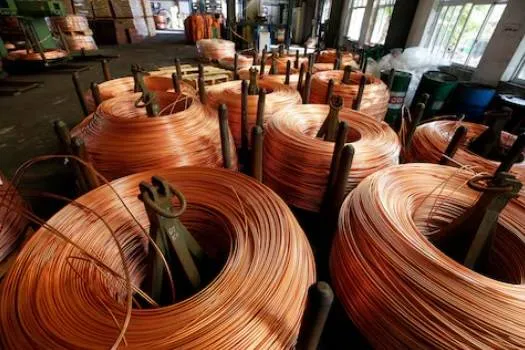
Copper prices fell on Thursday for the first time in five trading sessions, decreasing by 1.6% to $12,235.50 per metric ton on the London Metal Exchange. This drop occurred as investor concerns about a slowdown in global economic growth intensified, following U.S. President Donald Trump's commitment to continue pressure on Iran without specifying a timeline for ending the conflict in the Middle East.
Despite this decline, copper is expected to end the week up by about 0.4%, supported by previous gains, according to reports from Reuters. Copper is considered a key indicator of global economic health, which increases the importance of its movements in the markets.
Event Details
Alexander Claude, CEO of DBX Commodities, stated that copper is a highly sensitive asset to macroeconomic conditions, moving in parallel with stocks. He pointed out that negative sentiment regarding economic forecasts and ongoing geopolitical uncertainty significantly impacts the market.
In this context, the oversupply continues to pressure copper prices, as copper inventories on the London Metal Exchange rose to 364,450 tons, the highest level in nearly 8 years. Major copper smelters in China are planning to increase or maintain production during 2026, despite their commitment late last year to cut production by more than 10%.
Background & Context
Amid escalating geopolitical tensions, aluminum prices also fell by 3% to $3,424 per ton, despite fears of smelter closures in the Gulf region following recent Iranian attacks. The Iranian Revolutionary Guard has warned that Tehran's response would be "more painful" if its industries faced further attacks.
In other metals, zinc saw a decline of 1.7% to $3,235, while lead dropped by 1.3% to $1,916. Nickel decreased by 0.9% to $17,050, while tin suffered the largest losses, falling by 3.9% to $45,500.
Impact & Consequences
The declines in metal prices on the London Metal Exchange indicate a short-term move to mitigate risks ahead of the long weekend. The exchange is set to close on Friday and Monday for the Easter holiday, increasing investor caution.
In another context, the Chinese Ministry of Commerce confirmed that trade talks with the United States have stabilized trade relations, coinciding with the anniversary of American "Liberation Day." This comes at a time when the global economy faces significant challenges due to geopolitical conflicts.
Regional Significance
The Arab region is significantly affected by fluctuations in metal prices, as many Arab countries are among the largest producers and exporters of these metals. The decline in copper and aluminum prices may impact government revenues and increase economic pressures in producing countries.
In conclusion, the future of metal prices remains tied to economic and geopolitical developments, requiring investors to closely monitor events.