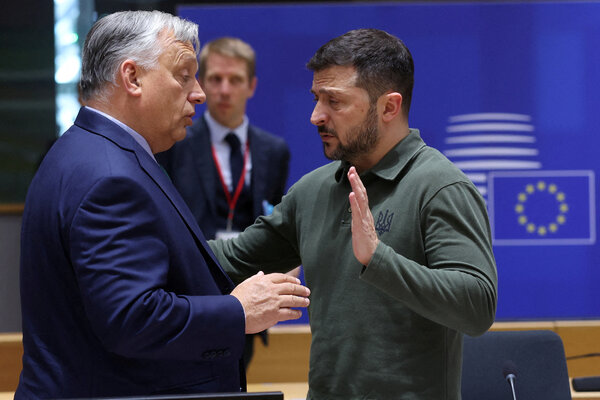
Ukrainian President Volodymyr Zelensky's comments regarding Hungarian Prime Minister Viktor Orban have provoked angry reactions from numerous politicians and observers. These remarks have been deemed a 'scandal,' particularly as they emerge during a period of escalating tensions in European relations due to the ongoing war in Ukraine.
In his statements, Zelensky criticized Orban's stance on the Ukrainian war, indicating that the Hungarian Prime Minister adopts policies that contradict European values. These remarks have displeased many observers, who believe that Zelensky has overstepped the boundaries in his criticisms.
Details of the Incident
These comments arise at a critical juncture, as Ukraine continues its efforts to garner European support in the face of the Russian invasion. Zelensky's remarks are seen as a call to pressure Orban to change his position on the war. He also noted that Orban's stance could negatively impact the unity of the European Union in addressing current challenges.
On the other hand, the Hungarian government responded to Zelensky's comments, asserting that the criticisms do not reflect reality and that Hungary is striving to maintain its national interests. They emphasized that dialogue is the best way to resolve disputes between nations.
Background & Context
Historically, the relationship between Ukraine and Hungary has been strained due to issues concerning Ukrainian minorities in Hungary. As the conflict in Ukraine escalates, these relations have become more complicated. Ukraine seeks international support, while Hungary adopts a more cautious policy in dealing with the crisis.
It is noteworthy that Orban is known for his controversial positions, as he embraces a strong nationalist policy, which sometimes puts him at odds with other EU countries. These dynamics render Zelensky's remarks part of a larger struggle within Europe regarding how to handle international crises.
Impact & Consequences
These comments could exacerbate tensions between Ukraine and Hungary, potentially affecting relations within the European Union. If these criticisms persist, European countries may find themselves heading toward greater divisions on how to address Russia and Ukraine.
Additionally, these remarks might influence Hungary's stance on European support for Ukraine, which could undermine efforts to assist Kyiv in facing military and economic challenges.
Regional Significance
Given the current situation, developments in Europe can indirectly affect the Arab region. Tensions among European nations could lead to changes in foreign policies, which may reflect on Arab-European relations.
Furthermore, the stability of Ukraine and Europe, in general, has implications for regional security, as any escalation in the conflict could impact energy prices and the global economy, affecting Arab countries that rely on energy imports.
The exchange of remarks between Zelensky and Orban reflects the increasing tensions in European relations, necessitating close monitoring by Arab nations that may be affected by these dynamics.