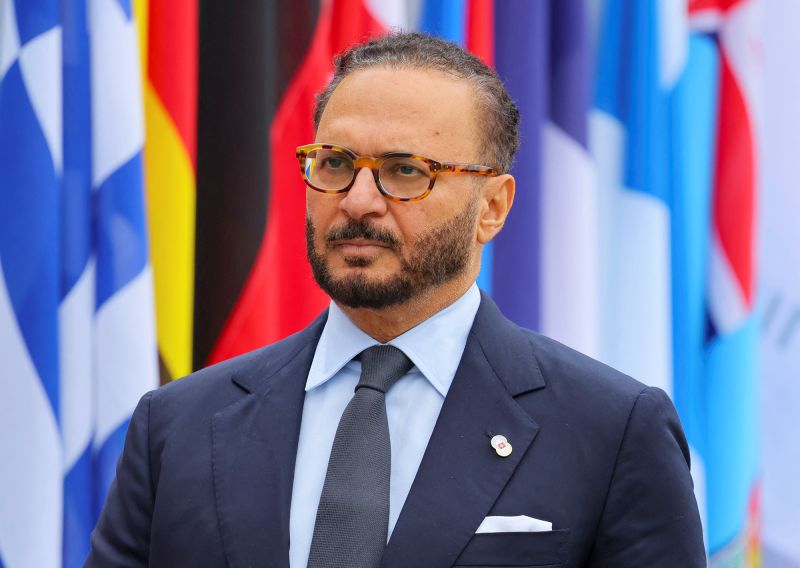
Dr. Anwar Gargash, the political advisor to the President of the United Arab Emirates, criticized the content of an article by former Iranian Foreign Minister Mohammad Javad Zarif published in Foreign Affairs, arguing that it ignores one of the most significant flaws in Iran's strategy, which is its targeting of Gulf countries. Gargash affirmed that these attacks reflect both arrogance and strategic failure, necessitating a reevaluation of Iranian policies towards the region.
Gargash's statements come at a sensitive time when the region is experiencing increasing tensions, as Iran seeks to bolster its influence by supporting armed groups in Gulf countries. According to Gargash, these policies only exacerbate crises and deepen the gaps between Iran and its neighbors.
Details of the Event
In his article, Zarif addressed a range of issues related to Iranian foreign policy, suggesting that external pressures have pushed Iran to adopt more hardline stances. However, Gargash contended that this perspective does not reflect reality, as Iran is contributing to destabilization in the region through its ongoing interventions.
Gargash pointed out that Gulf countries are not merely victims of these policies but are also capable of facing challenges by enhancing cooperation among themselves. He emphasized the importance of dialogue and understanding as a means to resolve conflicts, rather than resorting to force.
Background & Context
Historically, relations between Iran and Gulf countries have been marked by persistent tensions, especially following the Islamic Revolution in 1979. These tensions have escalated with the rise of Iranian influence in Iraq, Syria, and Lebanon, raising concerns among Gulf states about potential security threats.
In recent years, attacks on oil facilities in Saudi Arabia, along with assaults on commercial vessels in Gulf waters, have heightened tensions between Iran and Gulf nations. These events raise alarm about the possibility of military conflict in the region, a concern echoed by many observers.
Impact & Consequences
Gargash's statements underscore the necessity of reassessing Iranian strategies, as the continuation of this approach could lead to dire consequences for regional security. Furthermore, the failure to achieve stability may negatively impact the Iranian economy, which is already suffering from international sanctions.
On the other hand, these tensions could lead to strengthened cooperation among Gulf countries, contributing to the formation of new alliances to address common challenges. Such cooperation may have a positive effect on security and stability in the region.
Regional Significance
Gargash's remarks are part of ongoing efforts to enhance security and stability in the Arab region. The challenges facing Gulf countries are not limited to Iran alone but also encompass issues such as terrorism and internal conflicts in some Arab states.
Strengthening cooperation among Gulf countries can contribute to achieving sustainable development and enhance their ability to confront regional and international challenges. In this context, dialogue and understanding between Arab states and Iran could play a significant role in achieving security and stability in the region.