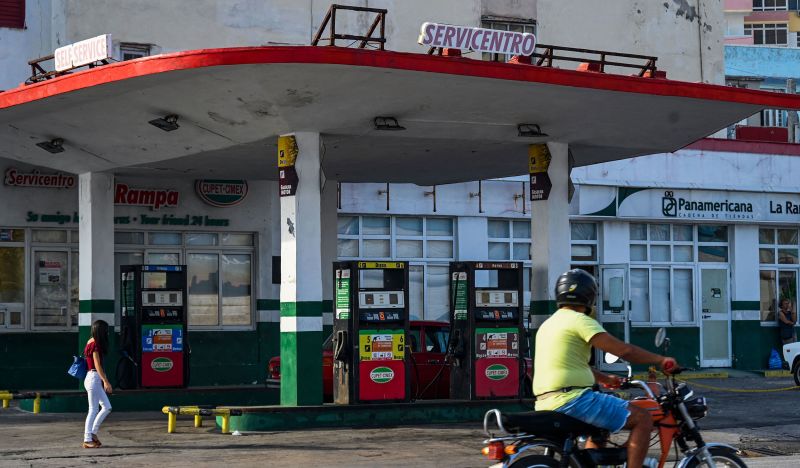
Cuban Foreign Minister Bruno Rodriguez condemned the U.S. blockade on fuel supplies to Cuba on Saturday, March 28, describing it as a "blatant lie" aimed at undermining the country's economy. Rodriguez pointed out that the United States adopts policies intended to undermine economic development in Cuba, exacerbating the suffering of the Cuban people.
In a tweet on the social media platform "X", Rodriguez clarified that American claims contradict the executive orders and laws established by Washington itself. He noted that the blockade includes threats of sanctions against countries and companies that supply oil to Cuba, in addition to hostile measures targeting oil tankers.
Details of the Event
These statements come at a time when Cuba is suffering from a severe economic crisis, as decades-long U.S. sanctions have worsened the situation. The United Nations has warned that the fuel shortage in Cuba contributes to an escalating humanitarian crisis, placing additional pressure on the Cuban government.
Rodriguez also indicated that U.S. policies aim to cut off Cuba's sources of income, hindering its ability to access the markets and technology necessary to boost development. He emphasized that these measures are not merely sanctions but part of a comprehensive strategy aimed at weakening Cuba.
Background & Context
Historically, Cuba has faced an economic blockade imposed by the United States since 1960, with a range of sanctions targeting all aspects of economic life in the country. These sanctions have led to a deterioration of the economic situation, resulting in a severe shortage of essential goods, including fuel.
Over the years, Cuba has attempted to adapt to these conditions by seeking new trading partners, but U.S. sanctions remain a significant obstacle. International reports have shown that the blockade has significantly impacted Cuba's ability to import fuel, leading to widespread humanitarian crises.
Impact & Consequences
Rodriguez's statements highlight the ongoing tensions between Cuba and the United States, which could escalate the situation in the region. As economic pressures continue, Cuba may resort to more drastic measures to confront the challenges it faces, potentially exacerbating humanitarian crises.
Moreover, the continuation of the blockade could affect relations between Cuba and other countries, as nations may hesitate to cooperate with Cuba for fear of U.S. sanctions. This could hinder Cuba's efforts to seek international support to address the crises it is experiencing.
Regional Significance
The issue of Cuba serves as an example of how U.S. policies impact other countries, raising questions about how Arab nations deal with external pressures. Many Arab countries face similar challenges as they strive for economic development under difficult circumstances.
Solidarity with Cuba could have a positive impact on relations between Arab countries and Cuba, potentially leading to enhanced cooperation in various fields, including energy and trade.
In conclusion, the recent statements by the Cuban Foreign Minister reflect the ongoing challenges faced by Cuba under the U.S. blockade. It is important for the Cuban issue to remain in the spotlight, as international support for Cuba could have a significant impact on the country's future.