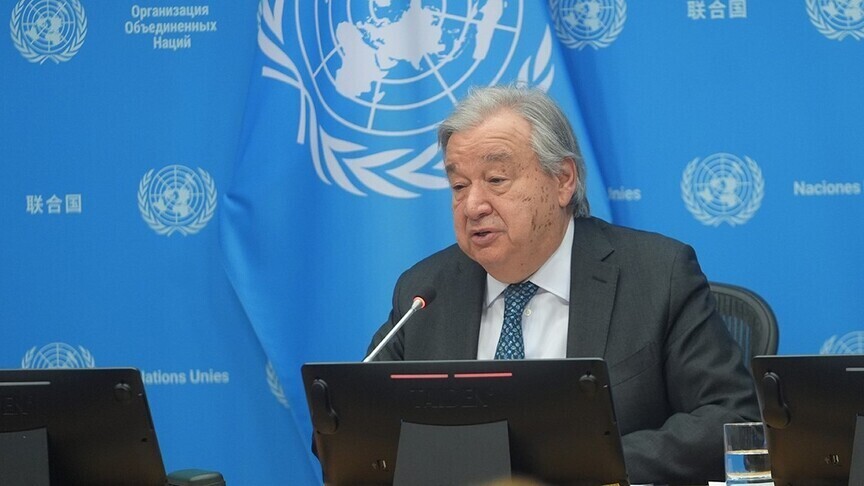
UN Secretary-General Antonio Guterres expressed deep concern over reports of escalating violence in Somalia's capital, Mogadishu. He urged all parties to exercise restraint and avoid actions that could worsen the deteriorating security situation. These statements come at a time when the country is witnessing increasing tensions, threatening its stability and security.
In the current circumstances, clashes between government forces and armed groups have intensified, resulting in numerous casualties and injuries among civilians. Guterres noted that the violence in Mogadishu could exacerbate the humanitarian crises faced by the country, where millions of Somalis live in harsh conditions.
Details of the Incident
The capital, Mogadishu, has been experiencing a noticeable increase in violence, with residential areas subjected to shelling and armed clashes. Reports indicate that these events have led to the displacement of many families from their homes, further increasing the suffering of residents who are already grappling with poverty and drought.
Guterres, who is closely monitoring the situation, called on all concerned parties to take immediate steps to halt the violence and protect civilians. He also urged the international community to provide the necessary support to Somalia to help it overcome this crisis.
Background & Context
Historically, Somalia has suffered from ongoing internal conflicts for over three decades, leading to state collapse and widespread poverty and drought. Despite international efforts to rebuild the state, security and economic challenges remain, making it difficult to achieve stability.
Mogadishu is a vital center for Somalia, housing many government institutions and commercial markets. However, the rising violence threatens to hinder any development and reconstruction efforts, exacerbating the plight of local populations.
Impact & Consequences
The escalation of violence in Mogadishu not only affects local security but also has regional implications. Somalia serves as a launch point for many extremist groups, making its stability crucial for regional security.
Moreover, the humanitarian crises resulting from the violence could lead to an influx of refugees into neighboring countries, increasing pressure on these nations and affecting the overall stability of the region.
Regional Significance
Given the situation in Somalia, Arab countries, especially those with interests in the Horn of Africa, should be aware of the developments. The stability of Somalia directly impacts food and economic security in the region.
Additionally, Arab cooperation in providing support to Somalia could contribute to enhancing stability in the region, benefiting all parties involved.
The situation in Mogadishu requires an urgent response from the international community, as the ongoing violence threatens to obstruct any efforts towards peace and development. All concerned parties must work together to achieve stability in Somalia and prevent the worsening of humanitarian crises.