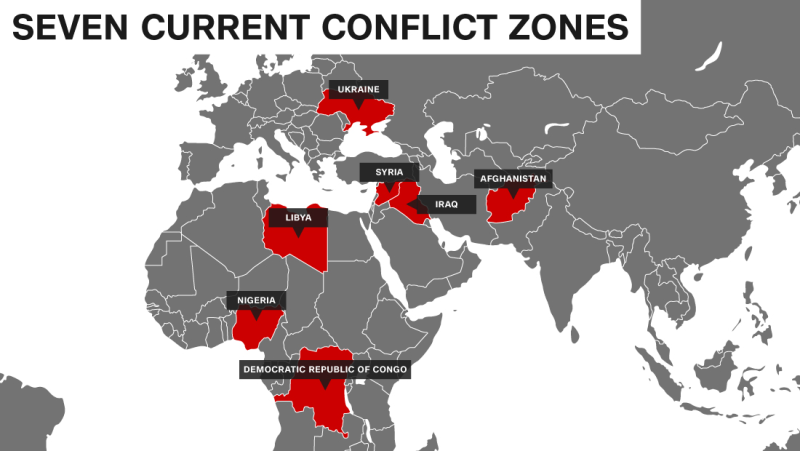
The international arena is witnessing rapid transformations amid the ongoing war, with indicators pointing to a reshaping of the international system. These changes are not limited to military conflicts but also encompass economic and political balances that may redraw the world map as we know it.
The challenges facing major powers are increasing, raising questions about the future of international alliances. As the intensity of conflicts escalates, there is an urgent need to rethink political and economic strategies.
Details of the Current Events
Major powers are increasingly interacting with current events, each seeking to strengthen its position on the international stage. The ongoing war could be a turning point in relations between countries, opening the door to new alliances and old tensions. Reports indicate that some countries may seek to exploit the chaos for their own interests, complicating the international landscape further.
In this context, fears are growing over the escalation of regional conflicts, as current disputes may lead to a deeper division among nations. There are also concerns about the implications of this war on the global economy, especially given the increasing reliance on global supply chains.
Historical Context and Background
Historically, the world has witnessed many wars that have led to radical changes in the international system. From World War I and II to regional conflicts in the Middle East, these events have always served as catalysts for reshaping alliances and powers. Today, it seems that the ongoing war may be similar in its impact on the international system.
The importance of emerging powers is increasing in this context, as countries like China and Russia seek to enhance their influence on the international stage. These new dynamics could lead to radical changes in how international relations are managed.
Potential Consequences and Impact
The potential consequences of this war could be far-reaching, leading to a redistribution of global power. Financial markets are expected to be significantly affected, potentially causing economic fluctuations that particularly impact developing countries.
Moreover, these changes may lead to heightened tensions between major powers, increasing the likelihood of new conflicts breaking out. In this context, the international community must be prepared to address these complex challenges.
Impact on the Arab Region
The Arab region is particularly affected by these transformations, as current conflicts may lead to increased instability in some countries. There are also fears that this war could exacerbate humanitarian crises in the region, necessitating urgent international intervention.
Under these circumstances, Arab countries must reassess their political and economic strategies and seek to enhance cooperation among themselves to face common challenges. Arab unity may be key to confronting these transformations.
In conclusion, the ongoing war represents a turning point in the international system, where countries must adapt to the rapid changes in the international arena. It is crucial for Arab nations to remain vigilant and collaborate to address the challenges that may arise as a result of these transformations.