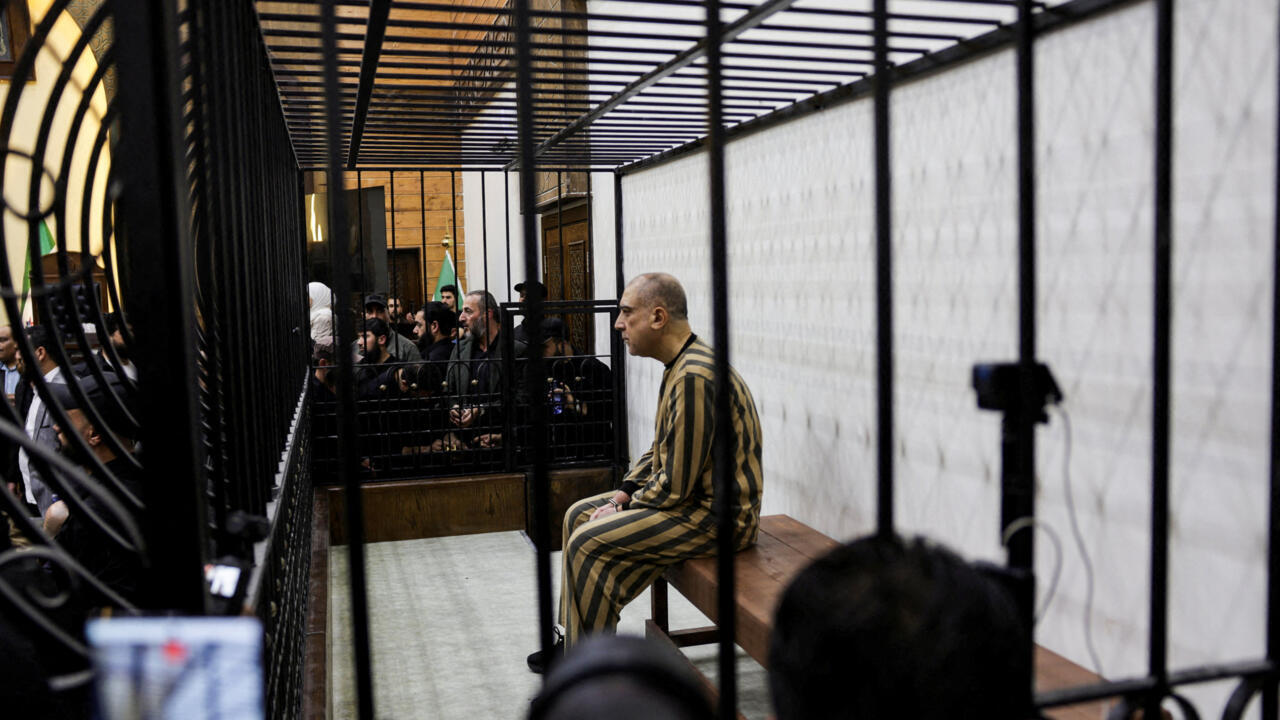
Former security official Aatif Najib appeared before the Fourth Criminal Court in Damascus, facing charges of murder, torture, and arbitrary detention that amount to war crimes. These crimes were committed against peaceful protesters who participated in the initial demonstrations against Bashar al-Assad's regime in Daraa in 2011.
This trial comes as part of the transitional authorities' efforts to prosecute figures from the former regime, representing a segment of the transitional justice process initiated by the government last month. Najib, who served as the head of the political security branch in Daraa, is one of the prominent names on the list of accused, having been placed on the U.S. sanctions list in April 2011 for human rights violations.
Details of the Trial
The court held its second session since April 26, where the names of eight defendants who were absent from the first session were read, including Bashar al-Assad and his brother Maher. The court announced the commencement of trials for the fleeing defendants and stripped them of their civil rights, placing their assets under government administration.
During the session, Judge Fakhr al-Din al-Aryan listened to the summary of the charges, noting that Najib bears direct responsibility for the systematic actions targeting civilians in Daraa, which included murder, torture, and arbitrary detention. Cases of torture against children for political slogans were also mentioned, along with the use of excessive force against peaceful protesters.
Background & Context
Protests erupted in Daraa on March 15, 2011, following the arrest of several children who wrote anti-Assad slogans on the walls of their school. These children were tortured, leading to the death of some, which ignited protests across the country. Security forces used excessive force to suppress the demonstrators, resulting in escalating violence nationwide.
After the protests intensified, Aatif Najib was removed from his position as a punishment for his role in the crackdown. He was arrested in January 2025 after the overthrow of the former regime, reflecting the new authorities' direction towards holding accountable those responsible for violations.
Impact & Consequences
The trial of Najib represents a significant step in the transitional justice process in Syria, as authorities seek to hold accountable those responsible for the violations committed during the years of war. These trials may help build trust between citizens and the new authorities, providing a model for accountability in the region.
However, challenges remain, as the new regime faces internal and external pressures. The trials may provoke reactions from supporters of the former regime, potentially leading to heightened tensions in the country.
Regional Significance
The trial of Aatif Najib is part of broader efforts to hold accountable those responsible for human rights violations in the Arab world. These trials may inspire other countries suffering under repressive regimes, as people strive for justice and accountability.
Ultimately, this trial represents an opportunity to highlight the importance of human rights and accountability in the Arab world, and it may mark the beginning of a new phase of justice and reconciliation in Syria.