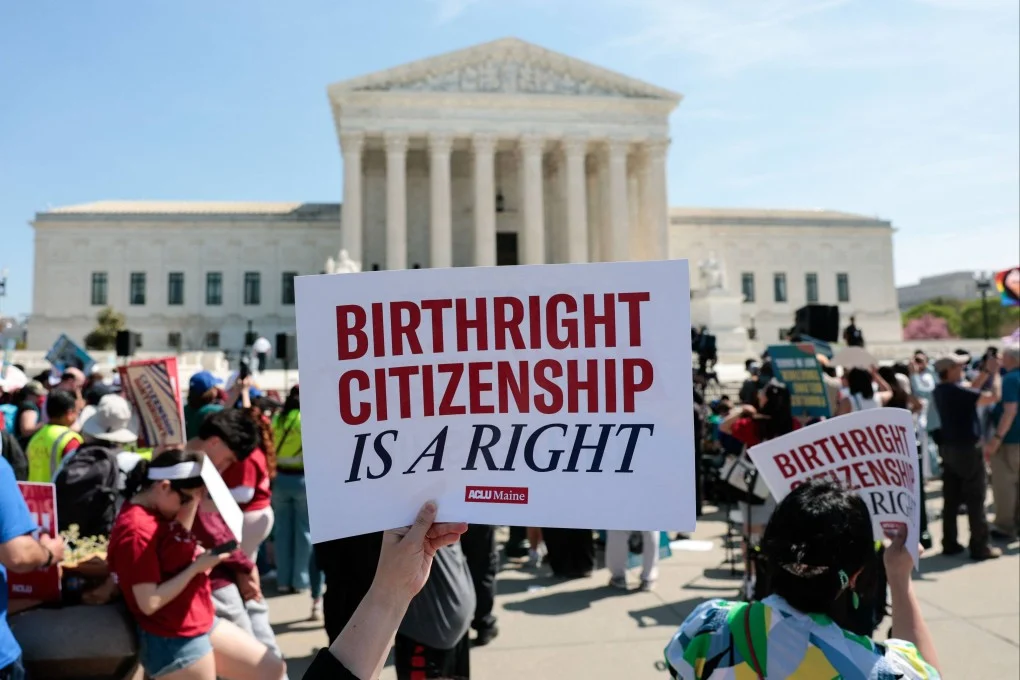
The issue of birthright citizenship has taken center stage as the US Supreme Court expresses skepticism over arguments presented in a significant case aimed at limiting this practice. This case aligns with the Trump administration's efforts to restrict citizenship granted to children born in the United States. Attorney General Dr. John Sauer, representing Trump, noted that birthright citizenship has led to the emergence of a "birth tourism industry," raising concerns about the influx of foreigners into the country.
During a hearing on Wednesday, several legal arguments were presented regarding how birthright citizenship affects national security, with Sauer asserting that thousands of foreigners, including those from countries deemed hostile by the United States, exploit this practice. The justices expressed some doubts about the legality of these arguments, indicating that the case may face significant legal challenges.
Details of the Case
The current case revolves around the issue of birthright citizenship, a practice that automatically grants US citizenship to children born in the United States, regardless of their parents' nationality. This topic has increasingly been addressed in recent years, especially under the Trump administration, which sought to reduce this practice. Legal arguments have been presented in the Supreme Court, highlighting the potential implications for American society.
During the session, the focus was on what is referred to as "birth tourism," where foreigners travel to the United States to give birth to their children, thereby granting them US citizenship. Sauer considered this phenomenon a threat to national security, noting that some of these foreigners may come from hostile nations. However, the justices expressed skepticism regarding the strength of these arguments.
Background & Context
The roots of the birthright citizenship issue trace back to the Fourteenth Amendment of the US Constitution, adopted in 1868. This amendment states that "all persons born or naturalized in the United States, and subject to the jurisdiction thereof, are citizens." This clause has been broadly interpreted to include all children born in the country, making the United States one of the few countries that automatically grants citizenship by birth.
Over the years, this issue has sparked widespread debate, particularly with the increase in immigration to the United States. Recent years have seen a surge in discussions surrounding immigration and citizenship, with some parties arguing that birthright citizenship encourages illegal immigration.
Impact & Consequences
If the Supreme Court decides to limit birthright citizenship, it could have significant implications for the US immigration system. This decision could reduce the number of children born in the United States who obtain citizenship, potentially affecting communities that rely on this system. It may also lead to increased tensions between the United States and other countries, particularly those that the US administration considers hostile.
Furthermore, this decision could have economic repercussions, as it may impact the tourism industry in general, particularly sectors related to birth tourism. This could result in job losses and revenue declines in certain industries.
Regional Significance
For the Arab region, this debate may have indirect effects. As more Arabs seek to immigrate to the United States, any changes in citizenship policy could impact their plans and dreams. This topic may also spark discussions about the rights of immigrants in Arab countries, where concerns about the restriction of their rights are growing.
In conclusion, the debate over birthright citizenship remains a complex issue that requires further discussion and analysis. As the Supreme Court continues to deliberate on this case, the potential implications will be a matter of significant interest in the coming months.