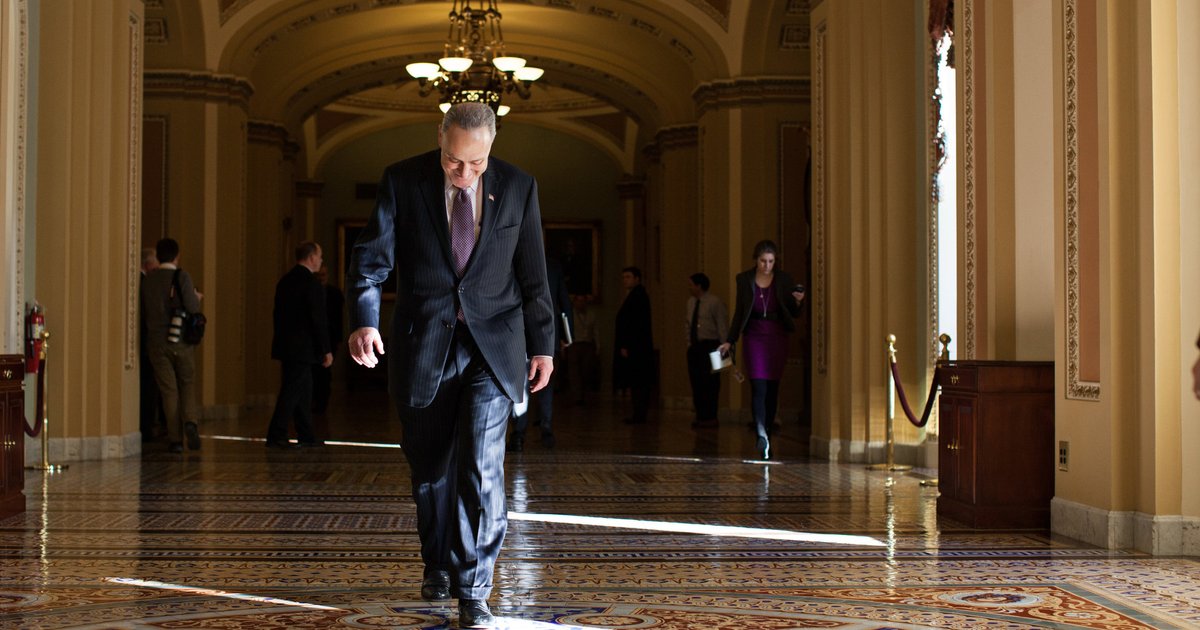
The Democratic leadership, under the guidance of Senate Majority Leader Chuck Schumer, is aiming to regain control of the Senate in the upcoming elections. However, some Democratic members are voicing their disapproval of the proposed plan. This move comes at a critical time as the party seeks to strengthen its position against Republicans who dominate several key states.
Amid the political and economic challenges facing the United States, Schumer is working to establish a clear strategy aimed at attracting voters and enhancing support for the party. Nonetheless, some Democratic members appear hesitant to back this plan, raising questions about party unity and its ability to compete in the upcoming elections.
Details of the Plan
Schumer's plan includes a focus on key issues such as healthcare, the economy, and climate change, as the party aims to provide tangible solutions to the problems that concern voters. However, some members express their worries that this strategy may not be sufficient to attract voters, especially in states that are considered Republican strongholds.
This challenge arises at a time when pressures on the Democratic Party are increasing, with polls indicating a decline in its popularity in certain areas. Additionally, internal divisions among members could negatively impact the party's ability to achieve its electoral goals.
Background & Context
Historically, the Democratic Party has experienced fluctuations in its popularity, having regained control of the Senate in previous elections after a period of Republican dominance. However, the current challenges, including economic and social issues, may affect the party's chances of maintaining this control.
The upcoming elections represent a real test for the party as it seeks to rebuild trust with voters and strengthen its position against Republicans. The current political landscape reflects a shift in voter priorities, necessitating the party to reassess its strategies.
Impact & Consequences
If the Democratic Party fails to unify its ranks and support Schumer's plan, it may struggle to achieve its electoral goals. Internal divisions could lead to a loss of seats in the Senate, which would impact the party's ability to pass important legislation in the future.
Furthermore, instability within the party may encourage Republicans to bolster their position, complicating the political landscape in the United States. Should the Democrats fail to regain control, Republican influence may strengthen in the coming years.
Regional Significance
The American elections are significant for the Arab region, as U.S. policies affect many regional issues, including the Israeli-Palestinian conflict and security in the Middle East. If the Democrats manage to regain control, the American approach to certain Arab issues may change, potentially positively impacting relations between the United States and Arab countries.
Ultimately, it remains to be seen how events will unfold in the coming months and whether Schumer's plan will receive adequate support from Democratic members. The upcoming elections represent a genuine opportunity for the party to reassess its strategies and regain voter trust.