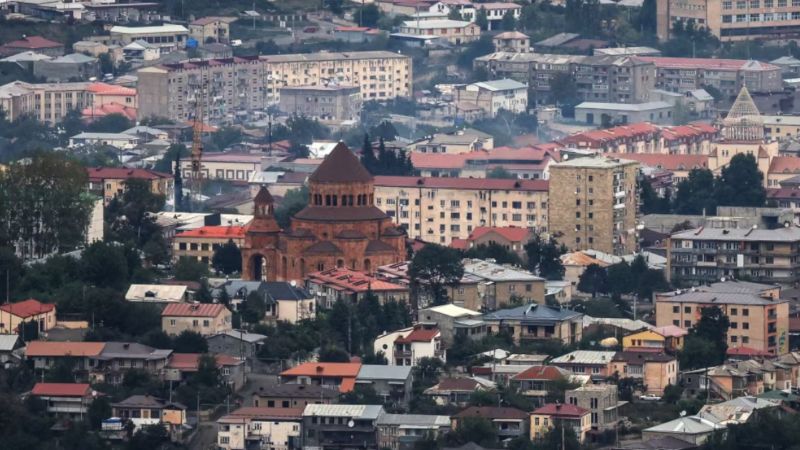
Satellite images confirm the destruction of two Christian churches in Khankendi, known to Armenians as Stepanakert, in the disputed Nagorno-Karabakh region. The two churches are the Mother of God Cathedral and St. Jacob's Church, with images published by media outlets corroborating earlier reports of this destruction.
Initial reports of the destruction of the Mother of God Cathedral, inaugurated in 2019, surfaced in Armenian media last April. New images released by Radio Free Europe have validated these reports, reflecting the deteriorating state of cultural and religious heritage in the region.
Details of the Incident
The Mother of God Cathedral serves as the primary center for Christian worship in the city, and the Armenian Church has accused Azerbaijani authorities of deliberately targeting sacred sites in an effort to erase the Armenian presence in the area. These events occur amid escalating tensions between Azerbaijan and Armenia over Nagorno-Karabakh, which has seen bloody conflicts in recent years.
It is noteworthy that until 2023, the Nagorno-Karabakh region had an Armenian majority, governed by the self-declared Republic of Artsakh following the end of the first Nagorno-Karabakh war. However, in 2023, Azerbaijani forces managed to take control of the area, leading to a mass exodus of Armenians to neighboring Armenia.
Background & Context
Historically, Nagorno-Karabakh has been a region rich in Armenian cultural and religious heritage, containing numerous churches and historical landmarks. However, the ongoing conflict between Azerbaijan and Armenia over this area has led to a deterioration of the security and humanitarian situation. Recent events have exacerbated conditions, with many Armenians in Azerbaijan still under detention, fueling anger in Armenia.
Internationally, Nagorno-Karabakh is recognized as Azerbaijani territory under international law, but the dispute remains unresolved. This conflict has raised concerns within the international community, with many countries calling for the respect of human rights and the protection of cultural and religious heritage.
Impact & Consequences
The destruction of churches in Nagorno-Karabakh is not merely an assault on religious landmarks; it also signals a rise in tensions between Azerbaijan and Armenia. This destruction could exacerbate conflicts and increase resentment among Armenian communities. Furthermore, targeting religious sites may negatively impact peace efforts in the region and complicate any future negotiations between the parties.
It is crucial for the international community to address this issue seriously, as the destruction of cultural and religious heritage constitutes a violation of human rights, and there should be international pressure on Azerbaijan to halt these practices.
Regional Significance
The events in Nagorno-Karabakh hold particular significance for the Arab region, reflecting regional tensions and religious conflicts that may affect stability in the Middle East. These events highlight the importance of protecting cultural and religious heritage in the context of conflicts, which should be a focal point for Arab nations.
In conclusion, there must be global calls to protect religious and cultural sites and ensure the rights of minorities in disputed areas. The destruction of churches in Nagorno-Karabakh serves as a reminder that conflicts not only affect the present but leave deep scars on history and heritage.