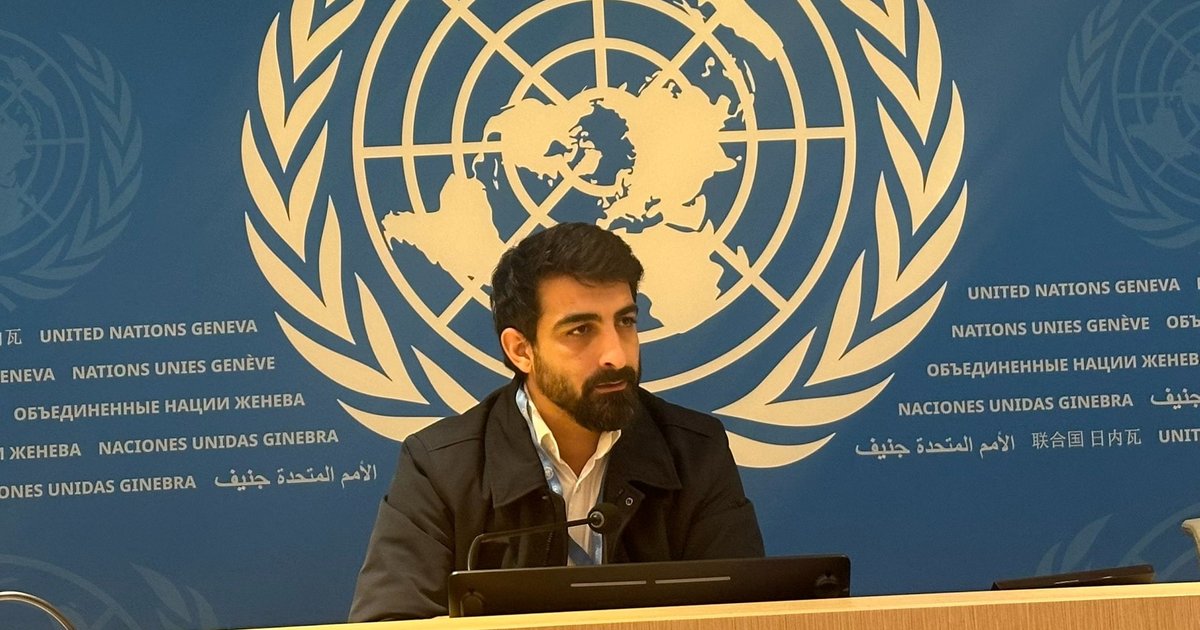
A diplomat at the United Nations resigned on Friday, accusing the international organization of preparing a scenario involving the use of nuclear weapons against Iran. Mohammad Safa, the representative of the "National Vision" organization at the UN, confirmed that he made this decision to "leak information," indicating that some high-ranking figures in the UN serve a "powerful lobby" rather than the organization itself.
In a social media post, Safa attached a picture of the Iranian capital Tehran, writing: "This is a picture of Tehran. For you, war hawks who have not traveled or served, the thought of bombing it is horrifying. It is not a sparsely populated desert." He pointed out that there are families, children, and ordinary workers in the city, warning that some people's desire for war is a sickening matter.
Event Details
Safa, who has served as the executive director of the National Vision organization since 2013, was appointed as the organization's permanent representative to the UN in 2016. His statements come just days after warnings from the World Health Organization, which said it is preparing for the worst nuclear scenarios if the conflict between the United States and Israel against Iran escalates.
The regional director of the World Health Organization, Hanan Balkhi, confirmed that "the worst-case scenario is a nuclear incident, and that is what concerns us the most," emphasizing that such an event would have consequences lasting for decades, affecting the region and the international community.
Background & Context
Since 1970, Iran has been a party to the Treaty on the Non-Proliferation of Nuclear Weapons, obligated as a non-nuclear state not to acquire nuclear weapons. However, in recent days, some Iranian politicians have called for Tehran to withdraw from the treaty, considering that it has not benefited the country amid escalating American and Israeli attacks on civilian nuclear sites.
In this context, Nobel Prize laureate and former director of the International Atomic Energy Agency, Mohamed ElBaradei, warned of the possibility of nuclear weapons being used in the ongoing conflict, noting that the presence of irrational leaders could lead to dangerous decisions.
Impact & Consequences
Safa's statements serve as a wake-up call regarding the potential risks that may arise from escalating tensions between Iran, the United States, and Israel. If the situation continues in this manner, it could lead to serious military escalation, threatening both regional and international security.
Concerns are growing that the use of nuclear weapons in any conflict could lead to catastrophic humanitarian consequences, not only at the regional level but also globally, necessitating urgent international intervention to prevent such an occurrence.
Regional Significance
Arab countries are directly affected by any escalation in the Iranian-American conflict, as it could destabilize the region. Arab nations remain on high alert, as any escalation could negatively impact regional security and affect Arab interests.
In conclusion, these events highlight the importance of diplomatic dialogue and the need to avoid military escalation, as peace and stability in the region depend on the ability of the involved parties to reach peaceful solutions.