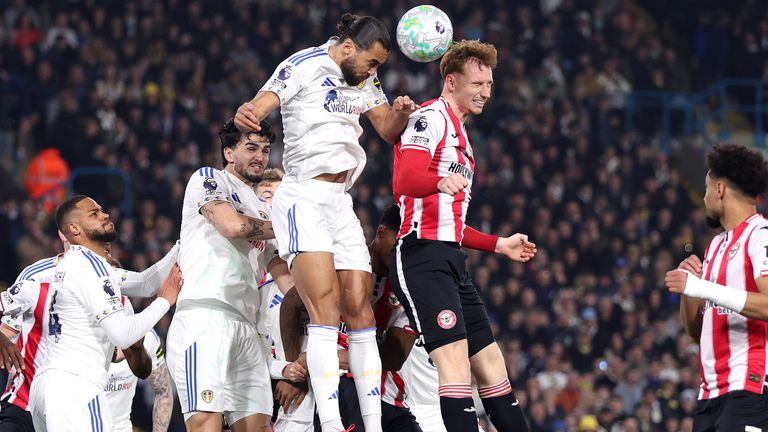
The match between Leeds United and Bournemouth ended in a goalless draw that stunned football fans, as neither team was able to find the back of the net, making it one of the least entertaining matches of the season. The game took place at Elland Road amid expectations of a strong showing from both sides, but the reality was the opposite, as the teams exchanged few chances that were not enough to change the scoreline.
Leeds United had an opportunity to pull further away from the relegation zone, especially with competitors in the survival battle playing on Sunday. However, instead, the team displayed a significant lack of style in their play, showing little courage to push forward in the match. This draw widened the gap to four points in front of West Ham United, making their position more precarious in the coming weeks.
On the other hand, Bournemouth took advantage of this draw to remain in a relatively safe zone, especially following wins by both Liverpool and Chelsea, increasing the points gap to seven behind Liverpool. This puts the team in a stable position, despite not delivering a performance that meets the expectations of their fans.
This match gains particular significance in light of the fierce competition in the Premier League. Throughout the season, the league has seen many ups and downs, and any draw or loss at this stage is particularly critical. Not to mention that this draw marks the fourth consecutive match in which Leeds has failed to score, indicating the struggles the team faces in their attacking line.
In a broader context, these results reflect an attacking crisis threatening survival for several clubs in the Premier League, especially those battling to avoid relegation. Performance indicators show that Leeds is not the only one facing issues in finding the net; many other clubs have struggled with a lack of cohesion between their attack and defense, potentially negatively affecting the league's image.
Furthermore, these encounters prompt fans and sports analysts to consider the importance of strategic planning in football, and how competitive opportunities can be provided for weaker clubs. Matches that display a level of weakness in performance represent an opportunity for managers to reassess their plans and tactics in pursuit of improving performance before the season's end.
Ultimately, football today witnesses the rise of prominent Arab clubs on the global stage, opening the door to discussions about continuing the path of excellence in player and coaching development. The efforts made in Arab clubs can find support stemming from these circumstances, with Arab fans looking on with hope for achieving local and international championships.
Some European experiences highlight how elevating smaller teams and their development can result from modern investments and sound planning, enhancing the hope that these contests contribute not only to forming a distinguished league but also to promoting the spirit of competition and the essence of sports as a whole.
It is noteworthy that this match also reflects a renewed image of the world's most popular game, where Premier League clashes remain loaded with incidents, whether victories, draws, or losses, leaving a significant impact on the hearts of its fans, especially in the Arab region that follows it passionately.
Thus, the encounter between Leeds United and Bournemouth is just one episode in a series of matches reflecting the sensitive state of competition. Football is not merely a sport; it is a complete life that mirrors cultures and communities, giving players and fans a chance to thrive in an atmosphere of excitement.