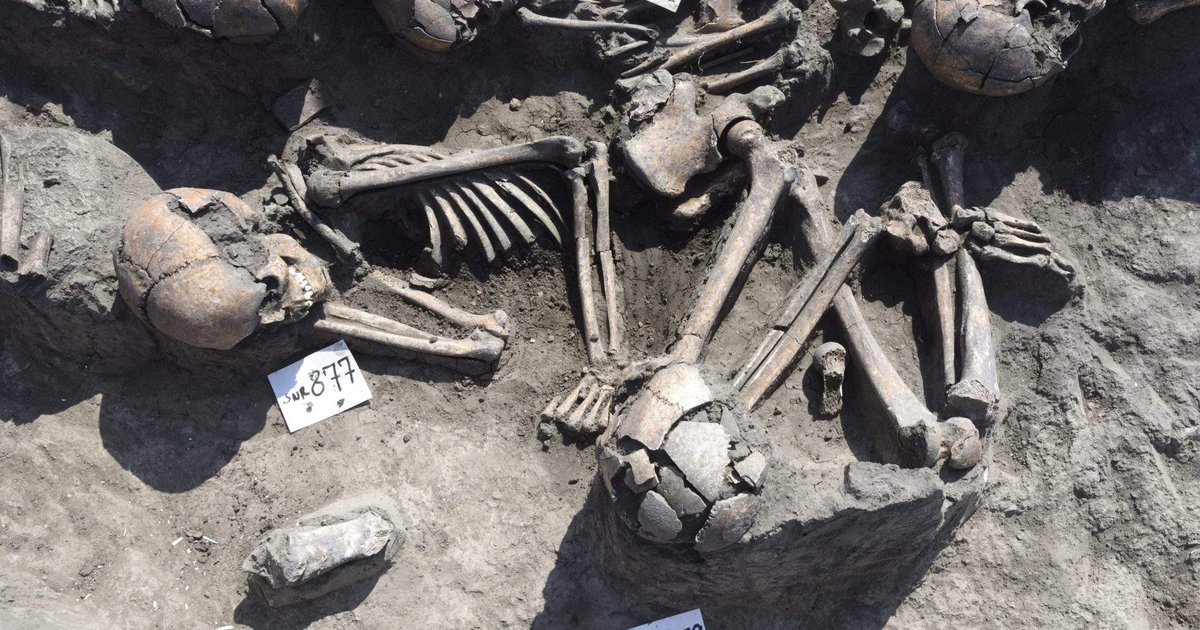
In a remarkable archaeological discovery, scientists announced the finding of a mass grave dating back to 2500 years containing the remains of children in the Tel Aviv area of Israel. This discovery highlights dark aspects of the region's history and raises questions about the circumstances that led to the deaths of these children.
The grave was uncovered during excavation work at an ancient archaeological site, where researchers observed a significant number of children's skeletons, indicating that this location was used as a mass burial site in ancient times. Scientists believe that these remains belong to children aged between a few months to three years, prompting inquiries into the social and health conditions that communities experienced during that period.
Details of the Discovery
According to the researchers, this discovery is among the most significant in the region's history, providing a glimpse into life and death in ancient times. The researchers noted that the grave contains over 30 skeletons, suggesting that this area was utilized as a mass burial site for children from various families.
Scientists believe that the economic and social conditions of that era may have contributed to high child mortality rates, leading to the use of this mass grave. Additionally, some tools and artifacts from that period were found, aiding in understanding the daily lives of those communities.
Background & Context
The history of the Tel Aviv area is rich with events, having been a center for many ancient civilizations. This region dates back thousands of years and has witnessed numerous political and social changes. In ancient times, the area suffered from wars and epidemics, significantly impacting the population.
These discoveries are part of archaeologists' efforts to better understand the region's history, as many archaeological sites have been found that provide new insights into the lives of people in those eras. This recent discovery adds a new layer of understanding regarding how social and economic conditions affected individuals' lives during that time.
Impact & Consequences
This discovery is significant not only from an archaeological standpoint but also from social and psychological perspectives. It raises questions about how communities cope with the loss of children and how such experiences can affect different cultures. Furthermore, it underscores the importance of preserving cultural heritage and artifacts as part of national identity.
Moreover, these discoveries could enhance cultural tourism in the region, allowing visitors to learn about the area's rich and sometimes tragic history. These findings may also contribute to fostering dialogue between different cultures regarding issues of life and death.
Regional Significance
The impact of this discovery extends to the Arab region as a whole, highlighting a long and complex history of conflicts and epidemics that communities have endured. This discovery could influence how Arabs understand their own history and that of their neighbors, emphasizing the importance of dialogue and understanding between different cultures.
Ultimately, this discovery reflects the importance of archaeological research in understanding human history and emphasizes the necessity of preserving cultural heritage as part of collective identity. Knowledge of the past can help communities build a better future.