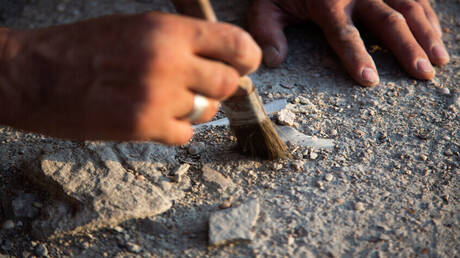
A scientific team has announced the discovery of an ancient city dating back 3000 years along the Silk Road, a site abundant with artifacts that offer new perspectives on urban development during the early Iron Age in Central Asia.
This city is regarded as one of the important discoveries reflecting the rich history and cultural diversity of the region. A variety of tools and artistic pieces from that era were found, showcasing the interactions among the different civilizations that existed along this historic route.
Details of the Discovery
The discovery was made in an area rich in archaeological remains, where excavations revealed that the city was a vibrant center for trade and culture. A diverse array of artifacts was uncovered, including pottery and jewelry, reflecting the high craftsmanship of the local inhabitants at that time.
Preliminary studies have shown that the city had an advanced urban system, with streets and buildings designed in a way that reflects sophisticated urban planning. This discovery underscores the city's significance as a commercial and cultural hub on the Silk Road, which connected the East and West.
Background & Context
The Silk Road is a historical network of trade routes that linked China with the Middle East and Europe. This route played a vital role in the exchange of goods and cultures throughout the ages. Its history dates back over 2000 years and has contributed to shaping trade and cultural relations among various civilizations.
Historically, Central Asia has been an important center for trade and culture, witnessing interactions among many peoples and civilizations. Archaeological discoveries in this region provide new insights into how ancient societies evolved and how trade influenced daily life.
Impact & Consequences
This discovery may alter our understanding of the history of ancient civilizations in Central Asia. By studying the artifacts and urban systems, scholars can gain valuable information about daily life, economy, and cultural interactions among peoples.
Moreover, this discovery enhances the importance of preserving cultural heritage and archaeological sites in the region, which may lead to increased tourism interest and scientific research in the future. Such findings could help strengthen the cultural identity of the region and promote it as a unique tourist destination.
Regional Significance
This discovery holds particular significance for the Arab region, as the Silk Road connected Arab and Asian cultures. These findings could contribute to fostering mutual understanding among different cultures, enhancing cultural and trade relations between Arab countries and Central Asia.
Additionally, such discoveries can inspire new generations of scientists and researchers in the Arab world to explore their history and cultural heritage. Understanding the shared history among peoples can help build bridges of cooperation and understanding in the future.