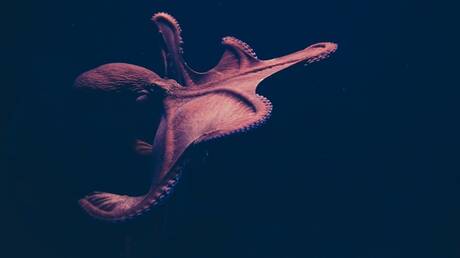
Researchers from Germany and Japan have uncovered evidence suggesting that at least two species of squid that lived in the seas during the Cretaceous period reached lengths of approximately 19 meters. This discovery opens new avenues for understanding the biological diversity that the Earth experienced during that time, reflecting the enormity of these marine creatures that inhabited ancient oceans.
Squid are considered among the largest predatory invertebrates to have lived on Earth, and recent studies have shown that these creatures were characterized by their massive size and ability to adapt to various environments. The evidence was found in rocks dating back to the Cretaceous period, underscoring the significance of this discovery in studying the evolution of marine life.
Details of the Discovery
The researchers based their study on the analysis of fossil remains found in various parts of the world, which indicated that giant squid lived in diverse marine environments. They noted that these creatures possessed unique hunting and survival capabilities, making them among the top predators of that era.
Modern techniques were employed in analyzing these remains, which helped accurately determine the size of these squids. The results showed that these creatures exceeded the size of many known species today, raising questions about how these organisms evolved over the ages.
Background & Context
The Cretaceous period spans from 145 to 66 million years ago and is known for its significant biological diversity. During this time, the Earth was home to a wide variety of living organisms, including dinosaurs and giant squid. Climatic and environmental changes contributed to shaping marine life and its diversity.
Squid are considered intelligent marine creatures, having evolved to adapt to different living conditions. This new discovery reflects how these organisms interacted with their environment and how environmental changes influenced their evolution.
Impact & Consequences
This discovery could have a significant impact on our understanding of the history of marine life and the evolution of living organisms. It opens the door for further research and studies on how marine organisms evolved under changing environmental conditions. Additionally, it may help in understanding how climate changes affect biodiversity in the oceans.
Moreover, this discovery could enhance awareness of the importance of preserving biodiversity in the oceans today, as many marine species face threats due to climate change and pollution.
Regional Significance
In the Arab region, seas and oceans are vital sources of biodiversity. This discovery highlights the importance of preserving the marine environment and biodiversity in the area. It may also encourage further research and studies in marine life within Arab waters.
Understanding the history of marine life can assist in developing effective strategies for conserving marine organisms in the region, contributing to the protection of the marine environment and ensuring its sustainability for future generations.