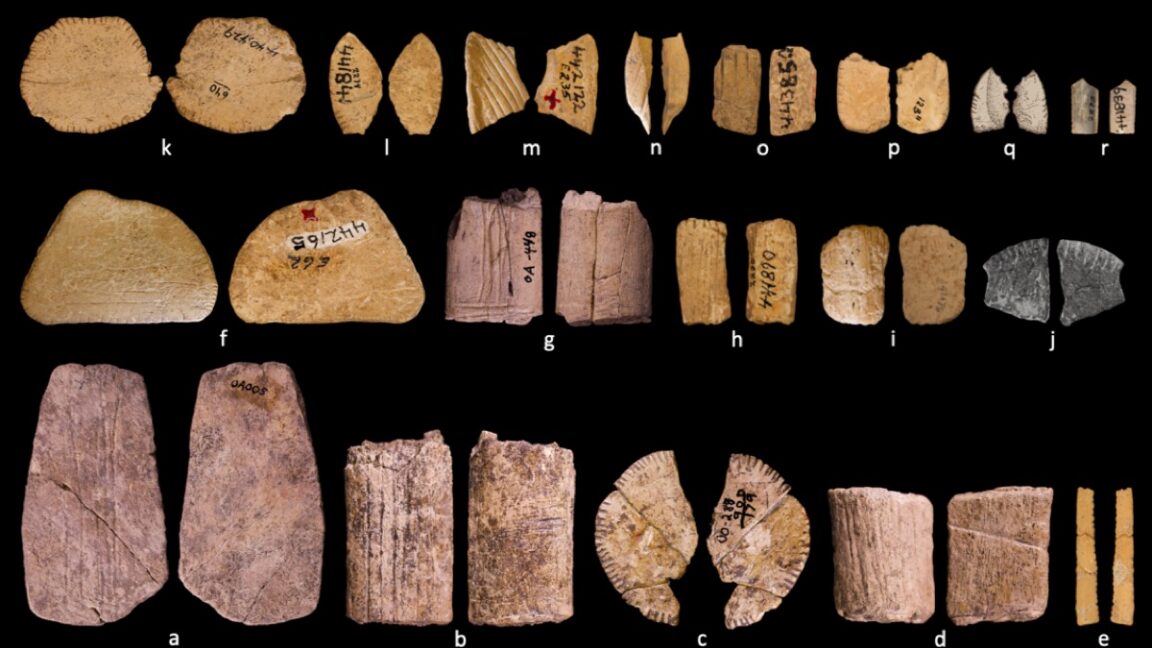
Recent studies reveal that Ice Age hunters and gatherers intentionally relied on random outcomes in their methods, indicating an early understanding of probability concepts. These discoveries stem from the analysis of ancient tools found, which reflect how these ancient communities thought about decision-making.
These results are intriguing as they reshape our understanding of how Native Americans thought during that era, where they dealt with the unknown in organized ways based on certain rules. Research has shown that these communities did not solely rely on intuition but followed studied strategies to achieve their goals.
Event Details
Researchers conducted a study on a collection of Ice Age tools, which includes primitive dice and other implements showing signs of use in games based on chance. The findings indicated that these tools were used in social and economic contexts, suggesting that Native Americans recognized the importance of probabilities in their daily lives.
These tools serve as evidence that ancient communities adopted complex ways of thinking, relying on random outcomes in decision-making related to hunting and gathering. These results open new avenues for understanding how human thought has evolved over the ages.
Background & Context
The origins of Native Americans date back thousands of years, as they settled in the Americas millennia before Christ. During the Ice Age, these communities lived under harsh conditions, which compelled them to rely on innovative strategies for survival. It is known that these societies interacted with their environment in complex ways, reflecting a high level of social and practical intelligence.
Historically, it was believed that these communities primarily relied on trial and error in decision-making. However, recent discoveries suggest that there was a level of organized thinking and awareness of probabilities present during that time, indicating an advanced intellectual evolution.
Impact & Consequences
These discoveries are significant for understanding the evolution of human thought, as they suggest that the ability to think in probabilities may be older than previously thought. This new understanding could impact how we study human history and cultural evolution, showing that ancient societies were more complex than mere survival.
Furthermore, these findings could influence multiple fields, including psychology and sociology, as they can be used to understand how human thinking has evolved over time. These discoveries may also inspire further research into how culture and environment influence human thought.
Regional Significance
While this discovery may seem directly related to Native Americans, there are lessons to be drawn in the Arab context. Just as Native Americans interacted with their environment in innovative ways, Arab communities also have a rich history of innovation and adaptation to various environmental conditions.
These discoveries could inspire Arab communities to explore their history and culture in new ways, enhancing a deeper understanding of human history in general. They may also stimulate future research on how cultural and social factors influence thinking and innovation in the Arab world.