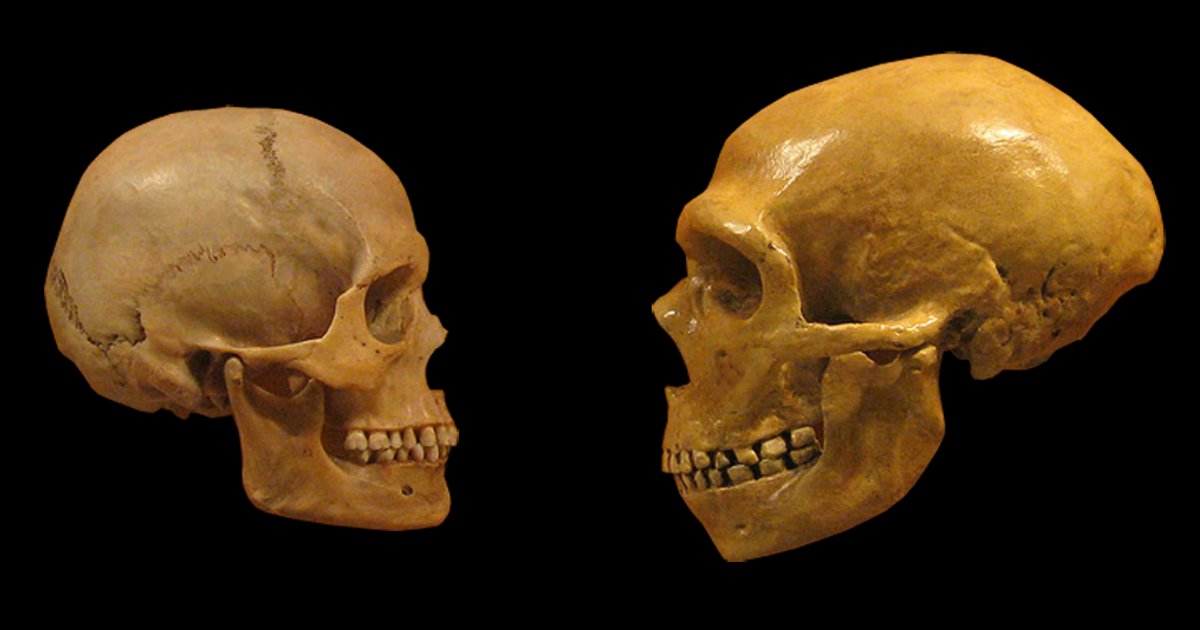
Recent research indicates that the differences between Neanderthal brains and our human brains may be less significant than previously thought. According to studies, these differences might be merely cosmetic, suggesting that Neanderthals possessed cognitive abilities similar to ours.
These findings come at a time when research on human evolution is intensifying, highlighting the relationships between different human species. Scientists believe that these discoveries could change our understanding of how human intelligence has evolved.
Details of the Discovery
The discoveries relate to a new study published in a prestigious scientific journal, where researchers analyzed the structure of Neanderthal brains using advanced techniques. The results showed that the differences between our brains and theirs are not as fundamental as once believed.
This study involved comparing measurements of Neanderthal brains with modern human brains, revealing that brain size is not the only factor determining cognitive abilities. In fact, the internal structure of the brain may have a more significant impact than we previously thought.
Background & Context
Historically, Neanderthals were considered a primitive type of human, but recent research has begun to alter this perception. Previous studies have shown that Neanderthals had complex tools and a rich culture, indicating that they possessed advanced cognitive abilities.
Neanderthals originated around 400,000 years ago and went extinct approximately 40,000 years ago. During this time, they interacted with modern humans, leading to gene and cultural exchanges. These dynamics may be key to understanding the evolution of human intelligence.
Impact & Consequences
These discoveries open new horizons in our understanding of human evolution. If the differences between our brains and Neanderthal brains are superficial, it implies that cognitive abilities may be more complex than we previously believed. This could lead to a reevaluation of how we understand human development.
Moreover, these results could influence future research in psychology and neuroscience, potentially aiding in understanding how cognitive abilities have evolved over time.
Regional Significance
In the Arab region, these discoveries may hold particular importance, reflecting a long history of interaction between different human species. This research could enhance the cultural and historical understanding of the region, which has been home to many ancient civilizations.
Additionally, these studies could contribute to advancing scientific research in the Arab world, encouraging further discoveries in the fields of biology and anthropology.
In conclusion, our understanding of human history and evolution is constantly changing, and these new discoveries about Neanderthals open new doors for research and understanding. By studying our brains and those of our ancestors, we can get closer to understanding our human nature.