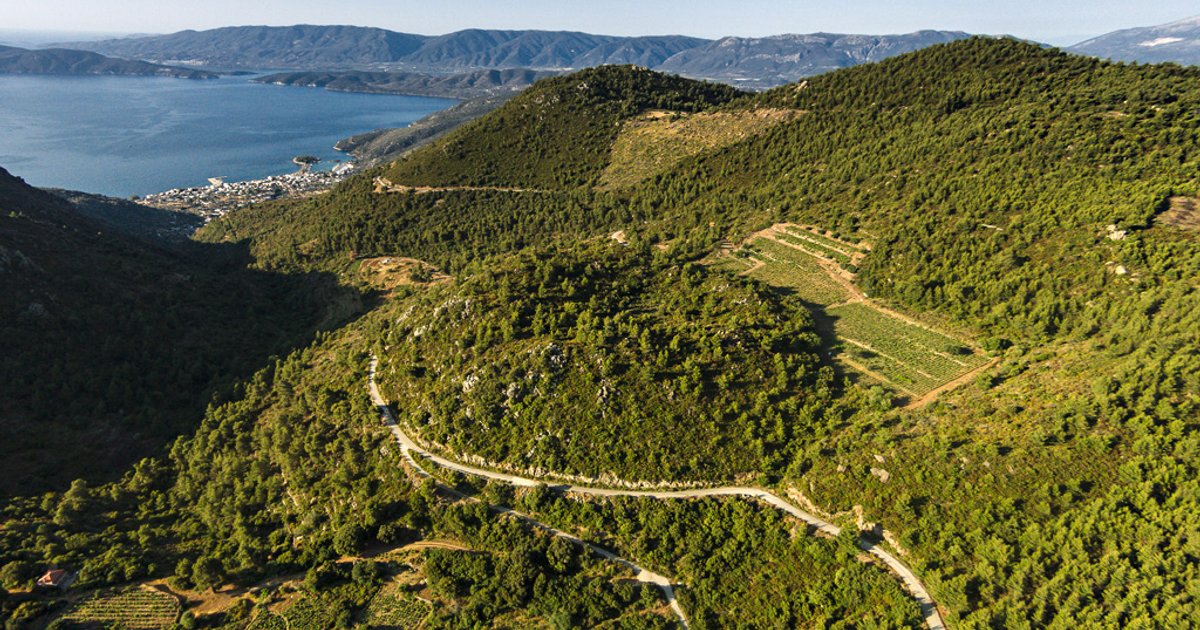
A recent study has shown that the Methana volcano, located approximately 60 kilometers southwest of Athens, can remain dormant for extended periods of up to 100,000 years before it resumes activity. These findings contradict the prevailing notion that a volcano is considered "extinct" if it does not erupt for 10,000 years.
Researchers have reconstructed the volcanic activity history of Methana over the past 700,000 years, identifying periods of eruptions separated by long intervals of dormancy. The longest dormancy periods, which lasted from about 280,000 to 168,000 years ago, were not evidence of the volcano's extinction but rather indicated significant magma accumulation underground.
Details of the Study
Rizvan-Gabriel Bopa, a volcanologist from ETH Zurich who led the study published in the journal Science Advances, stated, "This long period of dormancy occurred during prehistoric times, so we are reconstructing it based on the chemical evidence preserved in rocks and minerals." He explained that the volcano can be likened to an iceberg, where the visible part is only a small fraction of what lies beneath the surface.
The Earth consists of layers, including the outer crust we live on and the mantle directly beneath it, where magma forms. Volcanoes erupt when rising magma fills their underground chambers and pushes excess material toward the surface, while a lack of magma supply gradually leads to the volcano's dormancy.
Background & Context
The history of volcanic activity in Methana highlights the importance of understanding geological dynamics in volcanic regions. Despite the volcano's proximity to the Greek capital, Bopa emphasized that it is not expected to pose significant threats at present, as any future eruptions are likely to take the form of lava flows similar to those witnessed in the past.
However, the process discovered may be more widespread than previously thought, as many seemingly inactive volcanoes may continue to build magma chambers underground, particularly in regions like Greece, Italy, North and South America, and Japan.
Impact & Consequences
These findings suggest that long periods of dormancy do not necessarily mean that a volcano has reached its end. On the contrary, such periods may lead to magma accumulation, potentially resulting in larger and more powerful volcanic eruptions in the future. This new understanding could aid in improving volcanic activity prediction models.
This information is crucial for scientists and policymakers, as it may influence how they address the risks associated with volcanic activity. Additionally, understanding how magma accumulates can help develop better strategies for predicting volcanic eruptions.
Regional Significance
Although the volcano is located in Greece, the lessons learned from the Methana study could be relevant to the Arab region, where volcanoes exist in countries like Iraq and Syria. Understanding volcanic dynamics can help enhance preparedness for any potential volcanic activity in the future.
In conclusion, the study of the Methana volcano underscores the importance of ongoing research into volcanic activity and its challenges, emphasizing the need for awareness of potential risks even during periods of dormancy.