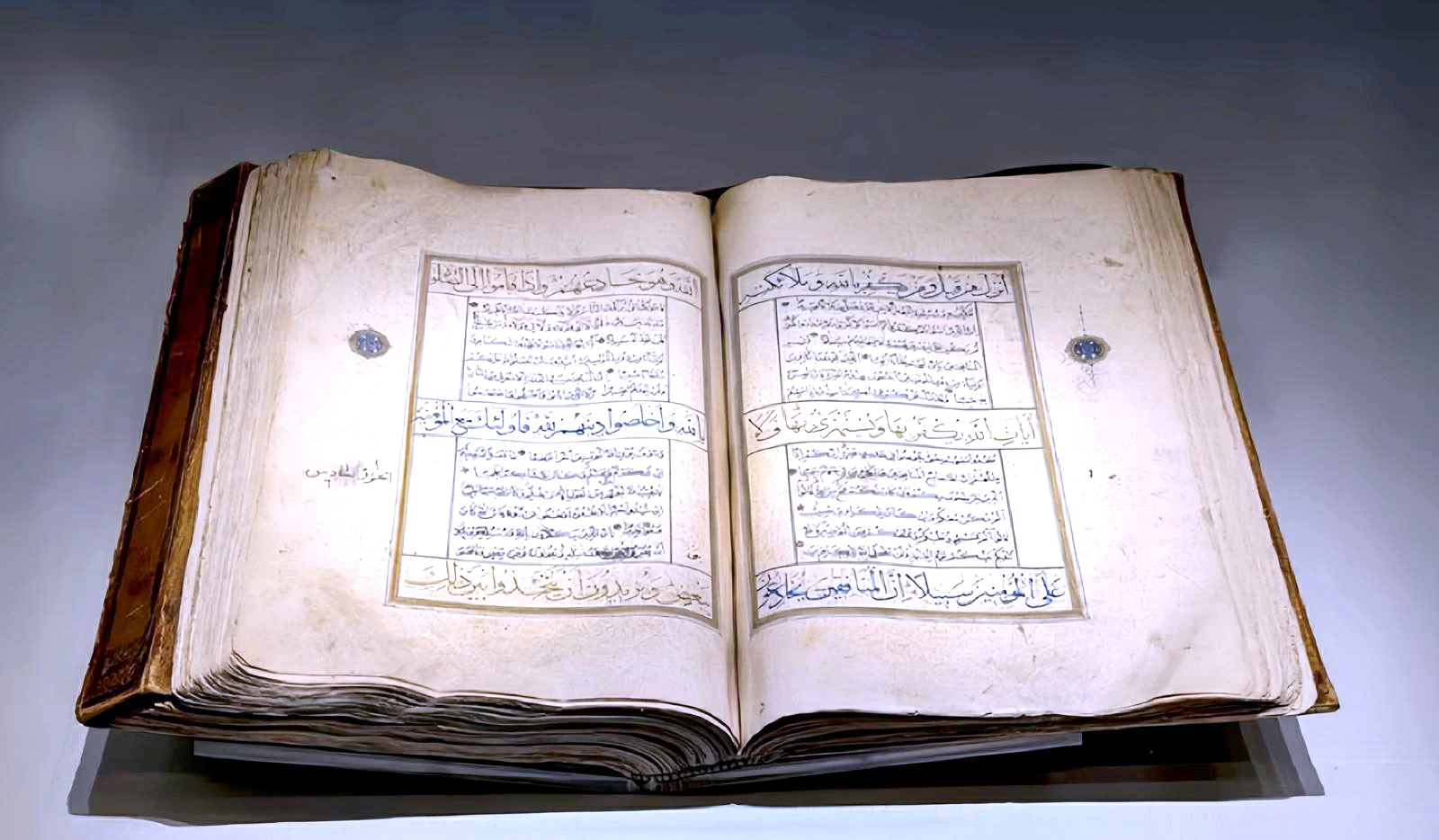
The Museum of the Holy Quran has revealed one of its rare possessions, a Holy Quran manuscript that dates back to the 13th Hijri century (19th century CE). This manuscript serves as a living example of the care Muslims have shown over the ages towards endowments for the Quran and their significant interest in mastering it artistically and decoratively.
The manuscript is distinguished by its writing in black ink, complemented with several colors, and is meticulously formatted with proper diacritics. The verses are separated by gilded circles, and the text is framed within its pages with multi-colored borders, reflecting a high level of artistic creativity.
Event Details
The manuscript includes markings for sections and parts that facilitate recitation and navigation through its contents, making it a valuable tool for Muslims around the world. Additionally, the manuscript is adorned with intricate decorations, gilding, and botanical illustrations at its beginning, middle, and end, showcasing an advanced level of Islamic arts.
The lines on the initial pages appear within gilded clouds, highlighting the aesthetic and civilizational dimension of Islamic calligraphy during that era. Accompanying information about the manuscript indicates that it has undergone previous restoration processes that preserved its artistic components, reflecting the efforts made to maintain Islamic heritage.
Background & Context
Historically, Qurans were considered among the most important endowments in Islamic societies, with a portion of these endowments allocated for their maintenance and decoration. This manuscript illustrates how Muslims cared for the Book of God and reflects the evolution of writing and decoration arts throughout the ages.
In the 13th Hijri century, Islamic arts experienced significant flourishing, as artistic elements were integrated with spiritual values, adding an aesthetic dimension to the Qurans. This manuscript is a vivid example of that era, reflecting the interaction between art and religion in Islamic culture.
Impact & Consequences
This manuscript serves as evidence of the importance of preserving cultural and religious heritage, contributing to the enhancement of Islamic identity. It also demonstrates how Islamic arts remain vibrant and practiced today, thereby increasing the value of traditional arts in contemporary societies.
Such discoveries provide an opportunity to educate new generations about the significance of Islamic heritage and how arts can reflect spiritual and cultural values. Additionally, this enhances cultural tourism, allowing visitors to learn about the history of Islamic art through these rare collections.
Regional Significance
This manuscript is a cornerstone for enhancing cultural pride in the Arab world, illustrating how Islamic arts have been and continue to be an integral part of Arab identity. This discovery can inspire contemporary artists and designers to draw new ideas from heritage.
It also underscores the importance of museums as centers for preserving cultural heritage, encouraging governments and communities to invest in culture and the arts. Preserving such collections is a collective responsibility, and efforts must be made to ensure the continuity of this heritage for future generations.