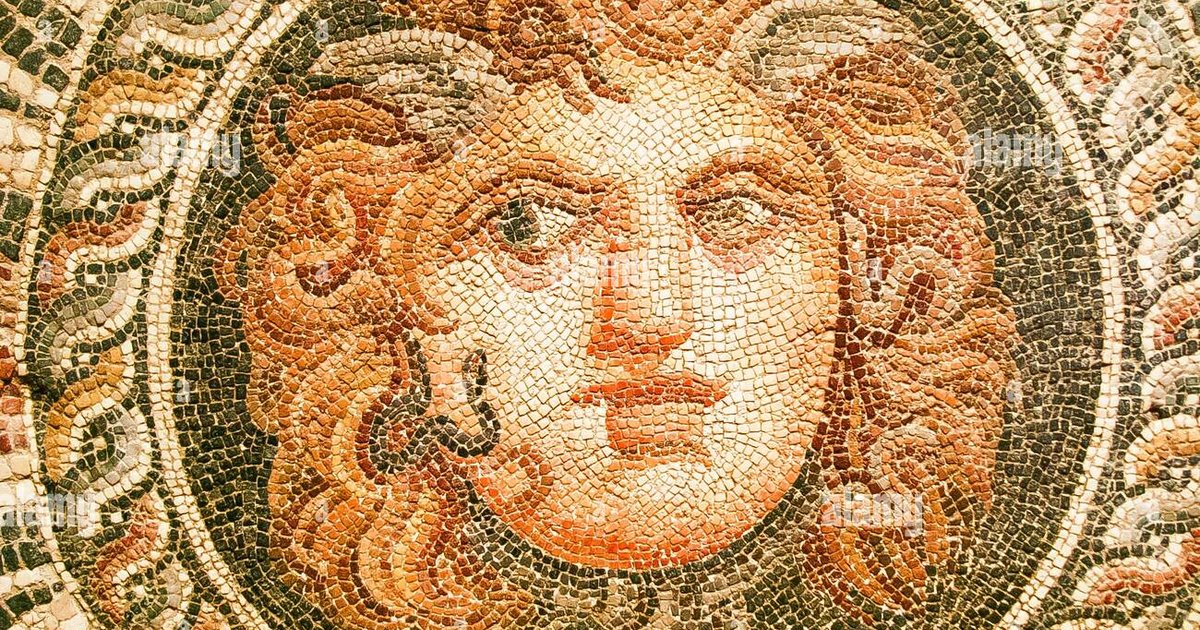
The Egyptian Museum has announced a new artistic discovery in the form of a rare mosaic that portrays the head of Medusa, the legendary figure known for her curse that turns anyone who gazes upon her into stone. This discovery is part of the museum's efforts to preserve the cultural and artistic heritage of ancient Egypt.
Medusa is one of the most famous figures in Greek mythology, known for her extraordinary beauty, but her curse has made her a symbol of fear and dread. The new mosaic, which represents her head, reflects the skill of ancient artists in using materials and colors, making it a unique piece of art.
Details of the Discovery
This mosaic was found during excavation work in an archaeological area near Cairo, where it forms part of a larger collection of mosaics dating back to ancient times. The mosaic is made of small pieces of glass and stone, designed in a way that captures the intricate details of Medusa's features, including her curly hair and her eyes filled with rage.
This mosaic is a valuable addition to the collections of the Egyptian Museum, as it reflects the cultural exchanges between ancient civilizations, particularly between Egyptian and Greek cultures. It also opens new avenues for understanding how the arts interacted during that era.
Background & Context
Historically, Medusa was considered a symbol of evil and danger, but she was also used as a symbol of protection in some cultures. In Greek civilization, Medusa was part of myths that tell stories of heroes and battles, reflecting the importance of mythological symbols in shaping cultural identity.
The mosaic exists within a rich historical context, where visual arts played a pivotal role in expressing religious and social beliefs and practices. This discovery reminds us of the importance of the arts in ancient civilizations and how they were used to convey cultural messages.
Impact & Consequences
This discovery not only highlights ancient arts but also reflects the importance of preserving cultural heritage in Egypt. With the growing global interest in Egyptian antiquities, this discovery is seen as an opportunity to enhance cultural tourism and attract visitors to the Egyptian Museum.
Moreover, the new mosaic may contribute to advancing academic studies on ancient arts, helping researchers gain a deeper understanding of the cultural and artistic history of the region. It is expected that this mosaic will be used as an educational tool in schools and universities to introduce students to their cultural history.
Regional Significance
The new mosaic serves as a bridge connecting ancient and contemporary civilizations, reflecting the rich cultural diversity in the Arab region. This discovery demonstrates how the arts can be a means of communication between different cultures and enhances the importance of the arts in shaping Arab identity.
In light of the challenges facing the region, preserving cultural and artistic heritage is an urgent necessity to promote national pride and cultural identity. This discovery strengthens efforts to preserve heritage and encourages further investments in cultural tourism.