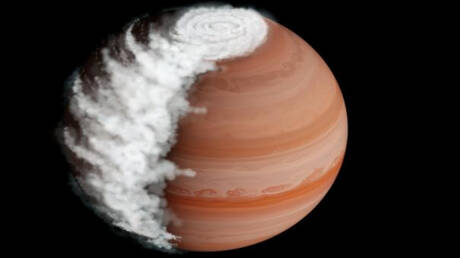
Astronomers have detected a strange phenomenon on a distant planet using the James Webb Space Telescope, where sand clouds form each morning and then completely disappear by evening. This discovery is the first of its kind and reflects the advanced capabilities of the telescope in studying atmospheres on distant planets.
This phenomenon is intriguing as it suggests the presence of complex atmospheric dynamics on this planet. Scientists believe that these sand clouds may result from changes in temperature or surface winds, opening the door for further research on how these factors influence weather on other planets.
Details of the Discovery
The James Webb Telescope, launched in December 2021, represents a significant leap in astronomy, as it can observe celestial bodies in wavelengths invisible to the human eye. This new discovery adds to the list of scientific achievements made by the telescope since its operation began.
The sand clouds observed are not merely a transient phenomenon; they reflect a complex atmospheric system that may help scientists understand how the atmospheres of other planets form. This information could be valuable in the search for life beyond Earth.
Background & Context
Astronomy has seen significant developments in recent years, particularly with the use of advanced telescopes like James Webb. These telescopes allow scientists to study distant planets in ways that were previously impossible, contributing to the expansion of our knowledge about the universe.
In recent years, many exoplanets have been discovered, but studying their atmospheres has posed a major challenge. New discoveries, such as the sand clouds, enhance our understanding of the climatic conditions on these planets.
Impact & Consequences
This discovery could change the way we understand distant planets. If sand clouds are forming and disappearing in this manner, it may indicate that complex atmospheric processes are occurring, necessitating a reevaluation of current models used to study planetary atmospheres.
Moreover, these phenomena could guide future research towards a better understanding of environments that may support life, thereby emphasizing the importance of exploring distant planets.
Regional Significance
As Arab countries continue to explore space, this discovery could have a positive impact on scientific programs in the region. Collaboration in astronomical research may open new horizons for innovation and development.
Additionally, enhancing scientific understanding of the universe can inspire new generations in Arab countries, contributing to the advancement of education and scientific research in space-related fields.
In conclusion, discoveries like this reflect the importance of technological advancement in astronomy and open new avenues for understanding the universe we inhabit.