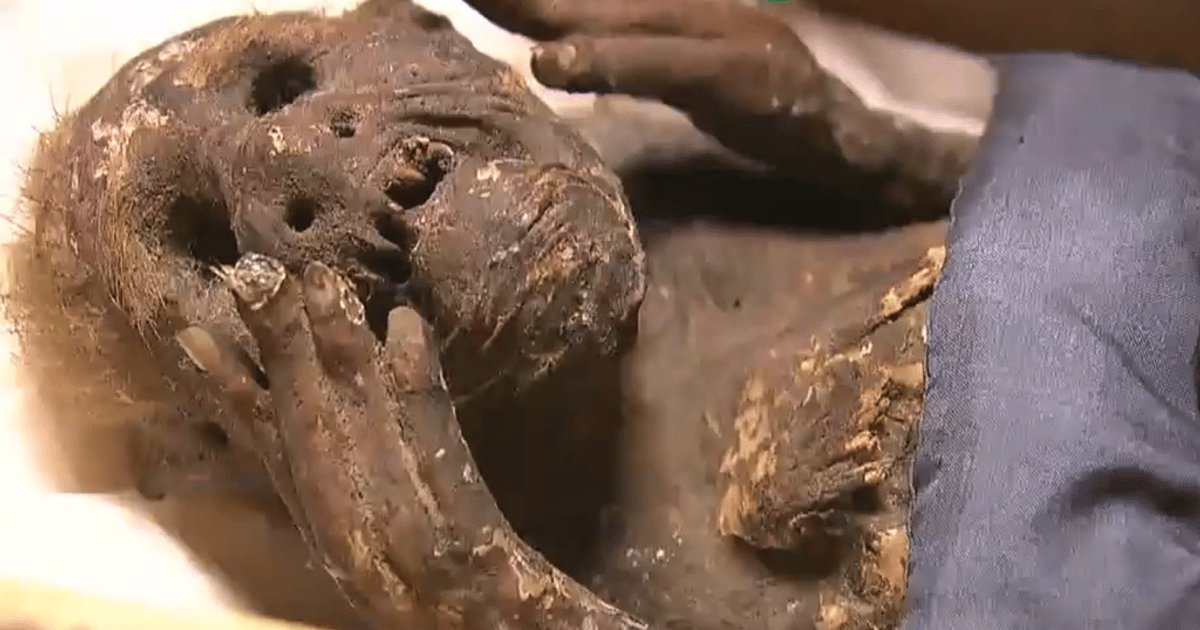
A bizarre mummy discovered in Fukushima Prefecture, northeastern Japan, has sparked widespread debate among folklore enthusiasts and cultural heritage researchers. The mummy, which features an upper body resembling a human and a lower part resembling a fish tail, has raised questions about its origin and its connection to the famous "Kappa" legend.
Media reports indicate that this unusual specimen, found inside an old house, is characterized by long arms, claw-like hands, and a mouth filled with sharp teeth. The mummy was displayed at the Oshu Rare Treasures Market, held during the Unizawa City Citizens' Exhibition on March 28 and 29, where it was offered for sale at a price exceeding £11,000 (approximately $14,000).
Event Details
Reports link this mummy to a legendary Japanese creature known as the "Kappa," which is considered a mythical being in Japanese folklore. Kappa are believed to inhabit rivers and ponds, characterized by features such as scaly skin and connected limbs, and often exhibit mischievous behavior in ancient tales.
The significant interest generated by this mummy on social media, where internet users have shared images and speculated about its origins, reflects human curiosity towards myths and mysterious creatures. While some view it as a representation of a legendary being, others point out similarities with other mythical creatures like the "Chupacabra."
Background & Context
Historically, Japan has seen the emergence of similar models of mythical creatures, often crafted for display in exhibitions or as art pieces. These artifacts frequently reflect ancient Japanese beliefs and folklore, making them an integral part of cultural heritage.
Despite the considerable media attention, heritage experts believe that these pieces are not remnants of real beings but rather handcrafted models. Researchers have cautioned against directly linking such artifacts to actual realities, emphasizing that the absence of scientific documentation renders current narratives closer to myth and media sensationalism.
Impact & Consequences
This discovery highlights how society interacts with myths and popular beliefs, also reflecting the influence of folklore on Japanese culture. It raises questions about how we understand cultural heritage and its impact on national identity.
In light of this interest, cultural tourism to Japan may increase as visitors seek to explore more about myths and mysterious creatures. This discovery could also lead to further research and studies on Japanese folklore and its influence on popular culture.
Regional Significance
Although this event occurs in Japan, it reminds us of the importance of folklore and myths in various cultures, including Arab culture. Just as myths play a role in shaping cultural identity in Japan, they do the same in the Arab world.
Myths continue to influence literature and arts in the Arab world, highlighting the importance of preserving cultural heritage. This discovery in Japan may impact how we understand our local myths and how to leverage them to enhance cultural tourism.
In conclusion, this discovery serves as a reminder of the power of myths in shaping our cultures and identities, reflecting human curiosity towards the unknown.