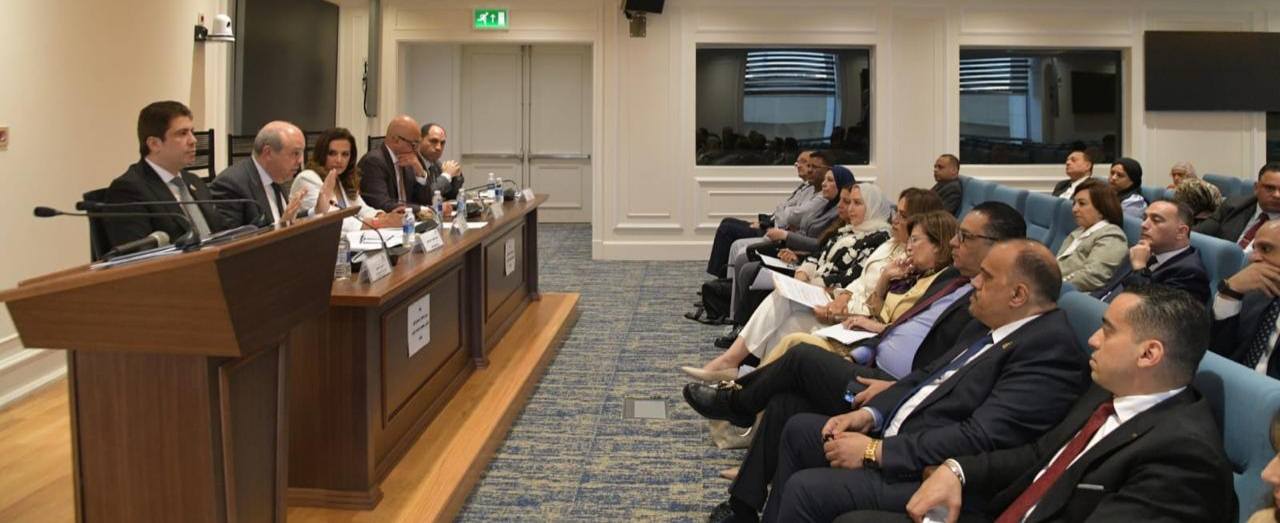
Dr. Sameh Hefni, Minister of Civil Aviation, attended a meeting of the Tourism and Aviation Committee in the House of Representatives, chaired by Representative Sahar Talaat Mustafa, where various issues related to the aviation sector were discussed. This meeting was part of the ongoing collaboration between the executive and legislative authorities, focusing on the inquiries related to the air transport system and the services provided to travelers.
During the meeting, the minister presented the ministry's vision for developing the aviation sector and enhancing its competitiveness amid regional and international challenges. He emphasized the state's commitment to implementing development and modernization plans in line with global changes.
Details of the Meeting
The minister addressed several important files during the meeting, including the prices of airline tickets, particularly on certain flights to and from Gulf countries. He clarified that any increases in prices are due to exceptional operational circumstances, including changes in flight routes and rising operational, insurance, and fuel costs, while assuring the regular operation is maintained efficiently.
The minister also reviewed ongoing development projects, notably the Terminal 4 project at Cairo International Airport, which aims to increase the airport's capacity to over 60 million passengers annually, utilizing the latest operational and technological systems.
Background & Context
Regarding EgyptAir, the minister explained that a plan is being implemented to modernize the fleet by adding 34 new aircraft by the year 2030/2031, bringing the total fleet to 97 aircraft. He noted the company’s improved performance and progress in international rankings, in addition to achieving positive financial results and a plan to eliminate accumulated losses.
He also highlighted the role of Air Cairo in supporting tourism movement through expansion plans and increasing its fleet to 82 aircraft over four years, enhancing operational integration with EgyptAir.
Impact & Consequences
In line with the direction towards environmental sustainability, the minister confirmed that the civil aviation sector is expanding the use of solar energy at several Egyptian airports. A study is also underway to establish a factory for the local production of Sustainable Aviation Fuel (SAF), supporting the state's efforts to reduce emissions and transition towards a green economy.
The minister also reviewed digital transformation efforts within the sector, such as the elimination of paper passport cards at Cairo International Airport and replacing them with a comprehensive electronic system, with plans to gradually extend this experience to other airports.
Regional Significance
The meeting addressed preparations for the Hajj season, emphasizing the enhancement of operational readiness and coordination among various entities to ensure the best services for pilgrims. These preparations reflect Egypt's commitment to providing distinguished services in the field of air transport.
In conclusion, the Minister of Civil Aviation affirmed that the ministry's strategy is based on comprehensive and sustainable development of the aviation sector, enhancing operational efficiency, and expanding partnerships, which supports Egypt's position as a leading regional hub in air transport. He also praised the role of the House of Representatives in supporting legislative and regulatory efforts that serve development and growth plans.