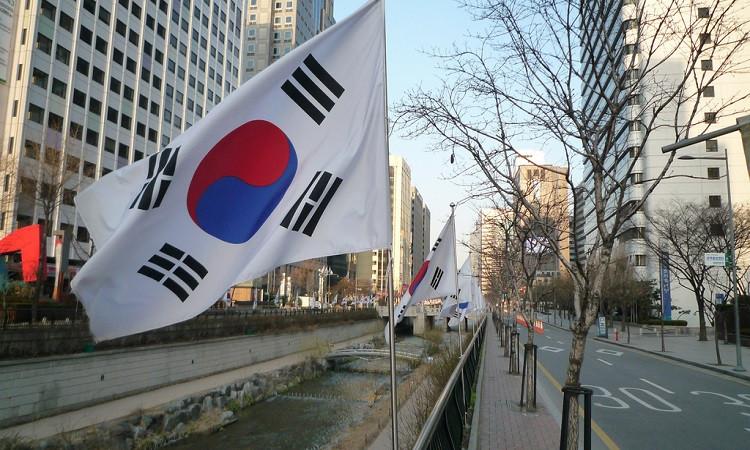
South Korea has surpassed the United Kingdom to become the eighth largest stock market in the world, fueled by a strong rally in technology stocks associated with artificial intelligence. The total market capitalization of listed companies in Korea has risen by over 45% this year, reaching $4.04 trillion. In contrast, the market capitalization in the UK has increased by about 3%, totaling $3.99 trillion, according to data compiled by Bloomberg.
The situation was different until the end of 2024, when the value of the British market was nearly double that of its Korean counterpart. The rise in Korean stocks reflects a global shift towards companies linked to artificial intelligence, which has supported gains for the country’s two largest listed firms, Samsung Electronics and SK Hynix.
Event Details
The two memory chip companies now represent over 40% of the total market capitalization of the KOSPI index, which includes more than 800 companies. Additionally, the policies of President Lee Jae-myung, aimed at supporting stock prices through corporate governance reforms and market-friendly policies, have contributed to this momentum.
Francesco Chan, an emerging markets and Asia-Pacific investment specialist at J.P. Morgan Asset Management in Hong Kong, stated: "The rapid rise of Korea and Taiwan reflects a structural rebalancing in global stock markets, driven by their dominance in artificial intelligence hardware, rather than tactical asset allocation."
Background & Context
The surge in Korean stocks parallels that of Taiwan, which also surpassed the UK in April to become the seventh largest stock market in the world. The gains were led by Taiwan Semiconductor Manufacturing, the largest chip foundry in the world, which now accounts for about 45% of the benchmark index on the island. The current market capitalization of Taiwan's stock market stands at $4.48 trillion, nearing that of Canada.
The FTSE 100 index in the UK has risen by about 4% this year, a level not far from the MSCI global index for all countries, but still significantly lower than the strong gains seen in markets benefiting from the AI boom.
Impact & Consequences
The UK stock market, the largest in Europe, remains dominated by traditional sectors such as financial services, consumer staples, and energy and mining companies. Patrick Kellenberger, an equity strategist for emerging markets at Lombard Odier in Geneva, noted that "factors such as AI potential, global defense spending, and corporate governance reforms support a sharper upward trajectory for Korean and Taiwanese stocks compared to Europe."
He added, "Europe still struggles to translate innovation into commercial applications and scale them. Creating conditions for innovative companies to emerge and grow is crucial, but it takes time."
Regional Significance
Despite the significant rise in stock values for Asian chip companies, the economies of the region remain much smaller than their major European counterparts. South Korea's GDP is estimated at around $1.9 trillion this year, while Taiwan's is about $977 billion, which is far below the estimates exceeding $3 trillion for Germany, the UK, and France, according to the International Monetary Fund.
Currently, Wall Street strategists remain optimistic about Korean stocks, pointing to raised earnings expectations supported by demand for AI and attractive valuations. Goldman Sachs has raised its target for the KOSPI index to 8000 points, primarily driven by an increase of over 200% in earnings growth expectations for 2026.