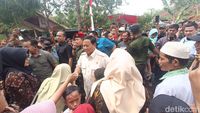
The visit of Indonesian President Prabowo Subianto to the integrated waste processing center in Banjarmasin, Central Java, highlights the local government's dedication to developing waste management in a sustainable economic manner. This was emphasized during the president's working visit to the waste processing center, where the importance of achieving the goal of a 'waste-free Banjarmasin' by 2028 was reiterated.
During the meeting, Sadio Tri Lastion, the Banjarmasin mayor, explained that President Prabowo expressed interest in achieving this goal, pointing out the necessity of adhering to the promises made. The president emphasized the significance of reaching this target by 2028, reflecting the central government's commitment to supporting environmental projects.
Event Details
As part of the visit, a presentation was made about the waste processing center, where Sadio mentioned that President Prabowo requested a commitment to achieve this goal, assuring that he would work towards it provided he receives the necessary support from the central government to build an additional 15 waste processing centers. The estimated cost for establishing these centers is around 111 billion Indonesian rupiah.
Sadio also noted that President Prabowo was impressed by the condition of the waste processing center, as there were no unpleasant odors, indicating the feasibility of managing waste in an environmentally friendly manner. Discussions included how to convert waste into economically valuable products, such as using plastic waste to manufacture items like tiles and household goods.
Background & Context
Waste management is one of the major challenges facing many countries, including Indonesia, where the amount of waste continues to rise. Studies have shown that Indonesia ranks high in plastic waste production, necessitating urgent action to improve the management of this waste and transform it into economic resources.
Historically, many regions in Indonesia have struggled with waste management issues, leading to environmental pollution and increased health risks. However, initiatives like those being implemented in Banjarmasin represent positive steps towards achieving sustainable waste management.
Impact & Consequences
This visit marks an important step towards enhancing cooperation between local and central governments in the field of waste management. With President Prabowo's support, Banjarmasin's waste management goals can be achieved, contributing to improved local environmental conditions and raising environmental awareness among residents.
Moreover, converting waste into economically valuable products can boost the local economy and increase revenues. This model could serve as an example for many other regions in Indonesia and beyond.
Regional Significance
Many Arab countries also face similar challenges in waste management, grappling with increasing waste volumes due to population growth and urban expansion. Successful experiences like that of Banjarmasin can inspire Arab nations to develop effective waste management strategies.
Promoting the concept of 'zero waste' can enhance environmental conditions and support sustainable development in the region, yielding both economic and environmental benefits.