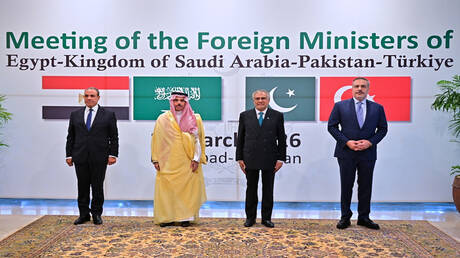
Pakistan's Foreign Minister, Shah Mahmood Qureshi, stated that war between Iran and the United States would not yield any benefits for either party, highlighting the importance of dialogue as a means to resolve the ongoing conflict between the two nations. These remarks were made during discussions with the foreign ministers of Turkey, Egypt, and Saudi Arabia in the Pakistani capital, Islamabad, where they addressed ways to achieve peace and stability in the region.
The talks come at a sensitive time when relations between Iran and the United States are experiencing heightened tensions, raising concerns within the international community. The four ministers emphasized the necessity of collective action to alleviate tensions and called for diplomacy as the primary means of resolving disputes.
Details of the Meeting
The meeting in Islamabad was part of Pakistan's efforts to enhance regional cooperation, where a range of political and economic issues affecting regional security were discussed. The ministers pointed out the importance of strengthening relations among Islamic nations and working towards mutual interests amid current challenges.
They also addressed the humanitarian situations in the region, stressing the need to provide support to countries affected by conflicts, particularly in light of the economic crises faced by many nations.
Background & Context
Relations between Iran and the United States have been increasingly strained since the U.S. withdrawal from the Iranian nuclear agreement in 2018, which led to the imposition of severe economic sanctions on Tehran. These tensions have heightened fears of an armed conflict that could impact the stability of the entire region.
In this context, Pakistan, which maintains good relations with both sides, is seeking to play a mediating role in easing tensions. Pakistan has previously hosted several meetings among Islamic countries to discuss regional and international issues.
Impact & Consequences
If tensions between Iran and the United States continue, they could lead to serious repercussions for both regional and international security. War would not only result in human and material losses but would also affect the global economy, particularly in the fields of energy and trade.
Furthermore, the ongoing conflict could exacerbate humanitarian crises in the region, necessitating urgent intervention from the international community. Thus, the diplomatic efforts being made by Pakistan and other countries may be crucial in preventing an escalation of the situation.
Regional Significance
Arab countries are part of this equation, as any escalation in the conflict between Iran and the United States could impact the stability of many Arab nations, especially those facing internal conflicts or tensions with Iran.
Arab nations are striving to enhance cooperation among themselves to address common challenges, and dialogue between Iran and Arab countries could be part of the possible solutions to achieve stability in the region.
In conclusion, hopes remain pinned on diplomatic efforts to resolve the conflict between Iran and the United States, as peace is the only option that can guarantee security and stability for all.