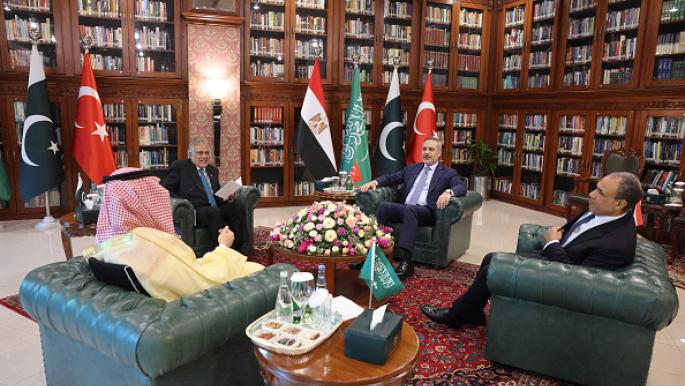
The Pakistani capital, Islamabad, is hosting an important Arab-Islamic meeting today, aimed at discussing ways to end the ongoing war in the region, as well as the possibility of launching new negotiations between the United States and Iran. This meeting comes at a time of increasing concern over escalating military tensions in the Middle East, necessitating urgent diplomatic moves.
This initiative is considered a significant step towards achieving peace and stability in the region, where armed conflicts continue to negatively impact the lives of millions. The meeting brings together representatives from several Arab and Islamic countries, aiming to exchange views and experiences on how to address the current crises.
Event Details
The meeting is being held under complex circumstances, with rising tensions between Iran and the United States, especially following a series of events that have exacerbated the situation. Participants in the meeting are expected to address multiple issues, including the situations in Iraq, Syria, and Yemen, and how these crises may affect regional security.
There are also expectations that ways to enhance cooperation among Islamic and Arab countries in facing common challenges, including terrorism and extremism, will be discussed. The meeting represents an opportunity to unify efforts and coordinate positions among the concerned countries.
Background & Context
Historically, relations between Iran and the United States have experienced significant fluctuations, with periods of intense tension followed by phases of détente. Since the United States withdrew from the Iranian nuclear deal in 2018, tensions have escalated markedly, leading to the imposition of severe economic sanctions on Tehran.
In recent years, the region has witnessed numerous armed conflicts, affecting stability in countries such as Iraq and Syria. These complex situations require intensive diplomatic efforts, as the international community seeks to find peaceful solutions to the ongoing crises.
Impact & Consequences
If the meeting succeeds in making progress towards ending the war, it could lead to improvements in humanitarian conditions in the region and enhance the prospects for peace and stability. It may also open the door for new negotiations between Iran and the United States, potentially contributing to easing tensions.
However, failure to achieve tangible results from the meeting could escalate the situation further and increase instability in the region. Therefore, the outcomes of this meeting will have significant implications for the future of regional and international relations.
Regional Significance
The results of this meeting are particularly important for Arab countries, which are suffering from the repercussions of ongoing conflicts. If an agreement to end the war is reached, it could contribute to improving economic and social conditions in many affected Arab nations.
Moreover, strengthening cooperation among Arab and Islamic countries in facing common challenges could help build new alliances that enhance security and stability in the region. Ultimately, hope remains pinned on the outcomes of this meeting to achieve the desired peace.