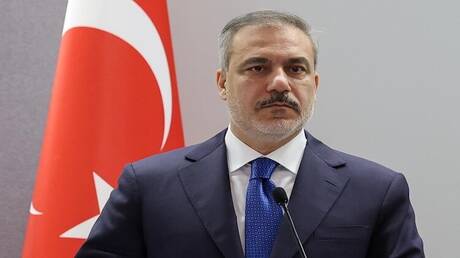
Turkish Foreign Minister Hakan Fidan met with his Iranian and Pakistani counterparts, Abbas Araghchi and Muhammad Ishaq Dar, to discuss the latest developments in negotiations between Tehran and Washington during a meeting held on Saturday. These discussions come at a sensitive time marked by increasing international tensions.
The three countries are seeking to enhance cooperation among themselves, especially in light of the political and economic challenges facing the region. The meeting reflects the importance of Turkey's role as a mediator in the negotiations between Iran and the United States, with Ankara playing a pivotal role in fostering dialogue between the two parties.
Details of the Meeting
During the meeting held in Ankara, the three ministers discussed ways to enhance regional cooperation and exchanged views on current international issues. They also addressed the recent developments in the nuclear negotiations between Iran and the United States, which have seen some progress in recent times.
Iranian Foreign Minister Abbas Araghchi emphasized the importance of dialogue as a means to resolve outstanding issues, indicating that his country is ready to negotiate transparently. Meanwhile, Pakistani Foreign Minister Muhammad Ishaq Dar expressed his country's support for Turkey's efforts in this area, stressing the importance of regional stability.
Background & Context
The roots of the negotiations between Iran and the United States date back several years, primarily concerning the Iranian nuclear program. Following the United States' withdrawal from the nuclear agreement in 2018, tensions between the two parties escalated, leading to the imposition of stringent economic sanctions on Iran.
In recent years, several countries, including Turkey, have attempted to mediate between the two sides to ease tensions. These meetings are part of broader international efforts to achieve greater stability in the region, especially amid the multiple crises it faces.
Impact & Consequences
These discussions are considered a significant step towards alleviating tensions between Iran and the United States and could positively impact regional relations. If an agreement is reached, it could lead to improved economic conditions in Iran and enhance stability in the region.
Moreover, the success of the negotiations could open the door for further cooperation among neighboring countries, contributing to security and stability in the Middle East. Conversely, failure in the negotiations could escalate tensions, adversely affecting all parties involved.
Regional Significance
The developments in the negotiations between Tehran and Washington hold great importance for Arab countries, as any agreement could impact regional security. Arab nations are closely monitoring these negotiations, as Iran's stability may reflect on conditions in Iraq, Syria, and Lebanon.
Furthermore, improved relations between Iran and the United States could help mitigate conflicts in the region, potentially enhancing security and stability in Arab countries. At the same time, any escalation could exacerbate existing crises and increase tensions in the area.
In conclusion, all eyes remain on the outcomes of these negotiations, as their success could open new avenues for regional cooperation, while failure could revert conditions to a state of tension. Amid increasing challenges, dialogue remains the optimal choice for achieving peace and stability.