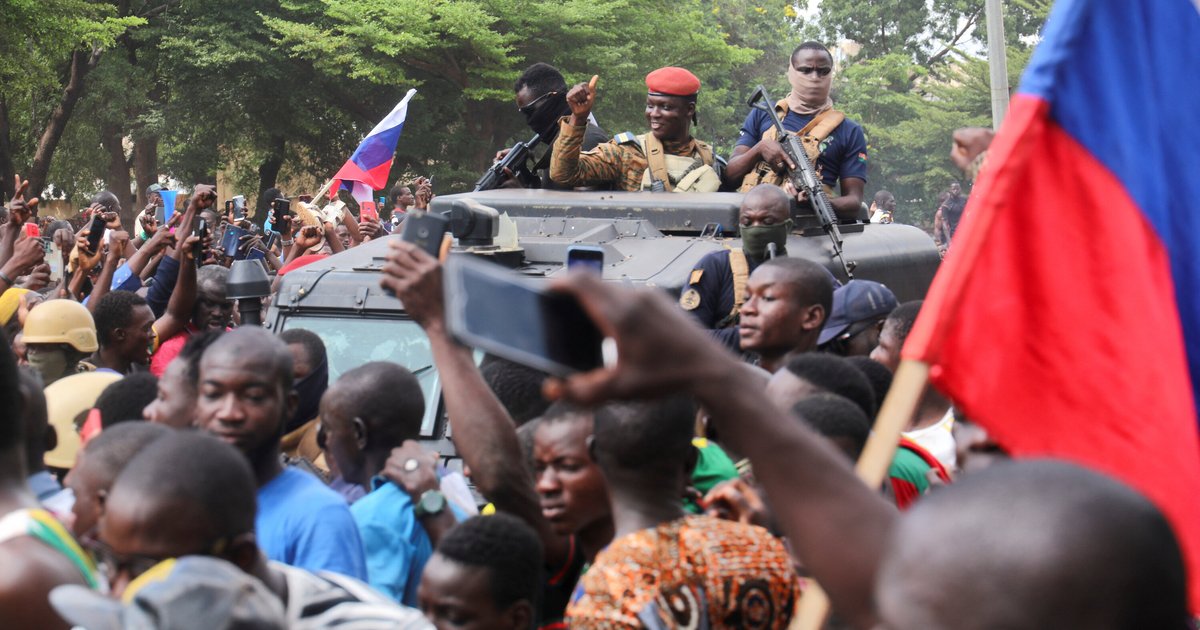
In shocking remarks, Burkina Faso's leader, Colonel Paul-Henri Sandaogo Damiba, asserted that democracy is not an option for the people at this time. This statement was made during a speech delivered to a crowd of citizens, where he indicated that current circumstances necessitate a focus on security and stability rather than being preoccupied with the democratic process.
These remarks come at a time when Burkina Faso is grappling with escalating violence and terrorism, as armed attacks by extremist groups have surged, resulting in numerous casualties and an increase in the number of displaced persons. It appears that the current government is seeking to consolidate its power through unconventional measures in managing the country.
Details of the Statement
During the speech delivered in the capital, Ouagadougou, Damiba stated: "Democracy is not for us at the moment; we must focus on security first." These comments reflect a shift in the political approach of the country, which had seen several attempts to transition to a democratic system in recent years after decades of authoritarian rule.
This move is part of a series of military coups that have occurred in the country in recent years, with Damiba assuming power in January 2022 after overthrowing the previous government. Since then, the new government has faced significant challenges in restoring security and providing essential services to citizens.
Background & Context
Historically, Burkina Faso has suffered from political instability, experiencing several military coups since gaining independence from French colonial rule in 1960. Political and economic crises have led to rampant corruption and weakened governmental institutions, contributing to the deterioration of security conditions.
In recent years, violence has surged in the country, with extremist groups, including Al-Qaeda and ISIS, targeting civilians and security forces. This has resulted in the displacement of over 1.5 million people, further increasing the pressures on the current government.
Impact & Consequences
Damiba's statements serve as a call to abandon the democratic system, raising fears of a potential return to authoritarian rule. This step could exacerbate the humanitarian and political situation in the country, where citizens are suffering from a lack of essential services and security.
Moreover, this shift may impact Burkina Faso's international relations, as the new government could face difficulties in securing external support, particularly from Western nations that emphasize the importance of democracy and human rights.
Regional Significance
The events in Burkina Faso are part of a wave of instability affecting the African Sahel region, which directly impacts regional security. The escalation of violence in this area could reverberate across neighboring countries, increasing tensions and complicating counter-terrorism efforts.
Additionally, these developments may influence Arab countries striving to promote democracy and human rights, serving as a warning of the risks that nations may face in the event of political instability.
In conclusion, Burkina Faso stands at a crossroads, where the current government must make difficult decisions amid multiple crises. Damiba's statements may signal the beginning of a new phase of governance, but the outcomes remain uncertain under the current circumstances.