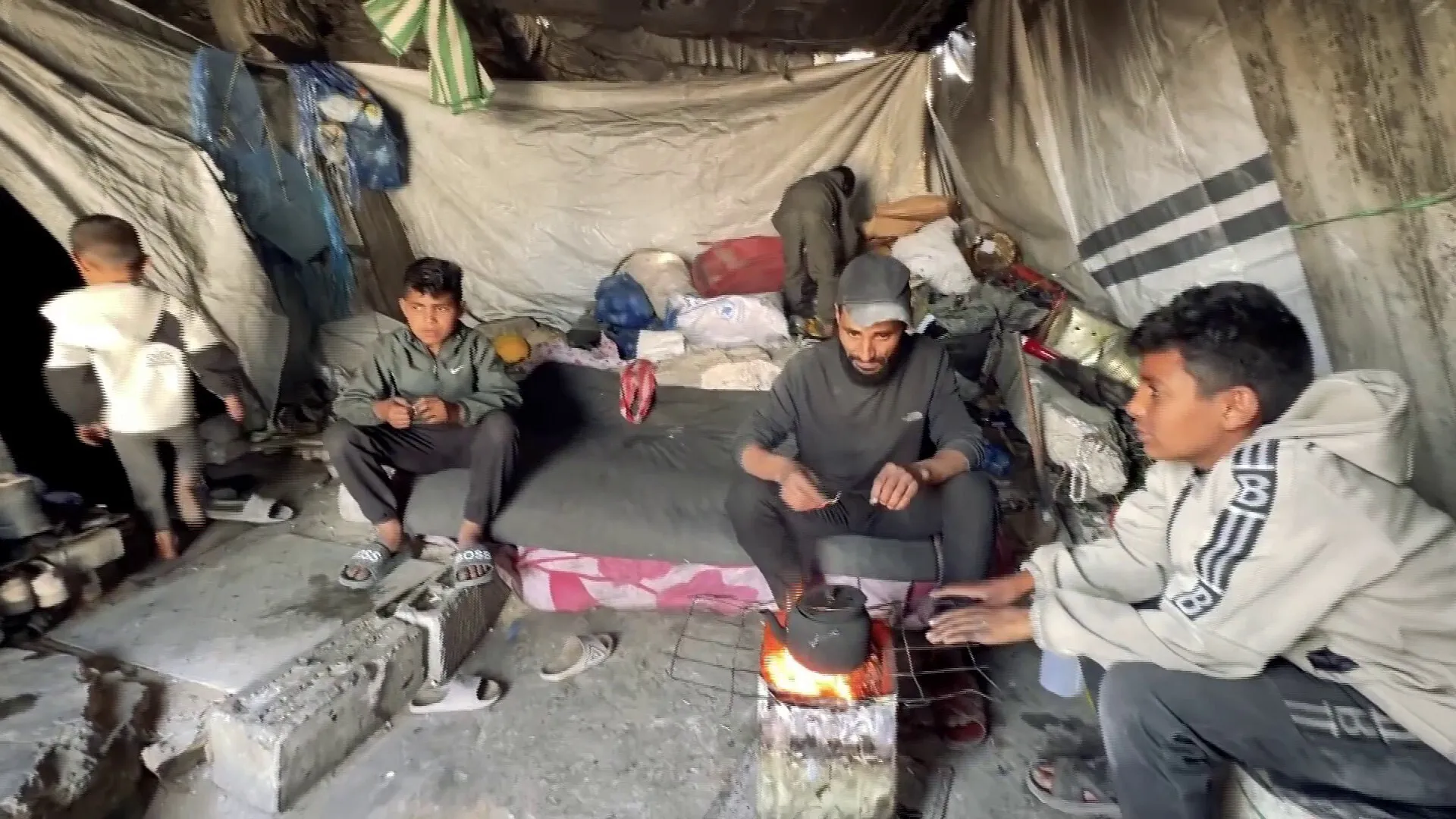
Under the pressure of dire humanitarian conditions in the Gaza Strip, many families have resorted to living in dilapidated buildings in an attempt to find shelter away from overcrowded camps. Despite the significant risks associated with this decision, the lack of alternatives has compelled them to make this harsh choice.
Mohammed, one of the displaced individuals, shares his experience with his children in a destroyed building, stating that the cramped spaces in the displacement camps were the primary reason for their move to this location. Although he is aware of the dangers, he considers these crumbling walls their only refuge amid the absence of other options.
Details of the Situation
Warnings from the Arab International Reconstruction Organization indicate that more than 2000 buildings in the Gaza Strip are at risk of collapse, endangering the lives of residents. Officials estimate that around 500 homes are currently occupied within these structures, raising concerns about the safety of the families living there.
Bilal Al-Harazin, an official at the organization, confirmed that many citizens have not responded to evacuation calls due to the lack of safe alternatives. This situation places families in a bitter choice between dying under bombardment or beneath the rubble of their crumbling homes.
Background & Context
Since the escalation began on October 7, 2023, approximately 1.9 million people have been displaced from the Gaza Strip, representing 85% of the total population. Many families have been forced to flee multiple times, exacerbating their suffering in the search for safety.
The humanitarian conditions in the region are continuously deteriorating, with displaced individuals facing severe shortages of humanitarian aid and shelter. This reality reflects the humanitarian dimensions of the ongoing crisis in Gaza, which requires an urgent response from the international community.
Impact & Consequences
The repercussions of this crisis extend beyond Gaza, affecting regional stability and escalating tensions in the area. The ongoing displacement and eviction highlight the failure of international efforts to find lasting solutions to the Israeli-Palestinian conflict.
Moreover, the deteriorating humanitarian situation raises alarms among humanitarian and international organizations, which warn of dire consequences if urgent actions are not taken to protect civilians and provide necessary aid.
Regional Significance
The humanitarian crisis in Gaza has sparked widespread concern across the Arab world, as citizens and communities closely monitor developments. The situation in Gaza underscores the urgent need for Arab solidarity and humanitarian support for those affected.
In conclusion, the situation in Gaza demands immediate action from the international community to protect civilians and provide necessary assistance, as the continuation of this crisis threatens the security and stability of the entire region.